Key Takeaways
- If the whole property has no water and there is no City notice, call Ottawa 3-1-1 before assuming the cause is a frozen indoor pipe.
- Ottawa asks residents to clear access to the indoor and outdoor shut-off valves so City crews can reach them.
- Only use the City's run-water instructions if the City advises your property to do so; do not guess a stream size or duration.
- For a freeze confirmed inside the home, Ottawa permits cautious electric heat such as a hair dryer or heating pad; never use an open flame.
- A frozen underground service pipe is not a DIY thaw or excavation project. Report it and follow the City's current process.
No water in an Ottawa home? Start with the right call
When winter temperatures stay low and a tap suddenly stops flowing, the urgent question is not simply “how do I thaw a pipe?” In Ottawa, a home can lose water because a small pipe inside the house froze, a water service pipe froze underground, or there is a planned or emergency interruption elsewhere. The next step depends on which system is affected. Guessing can waste time or lead to unsafe attempts to heat a buried line.
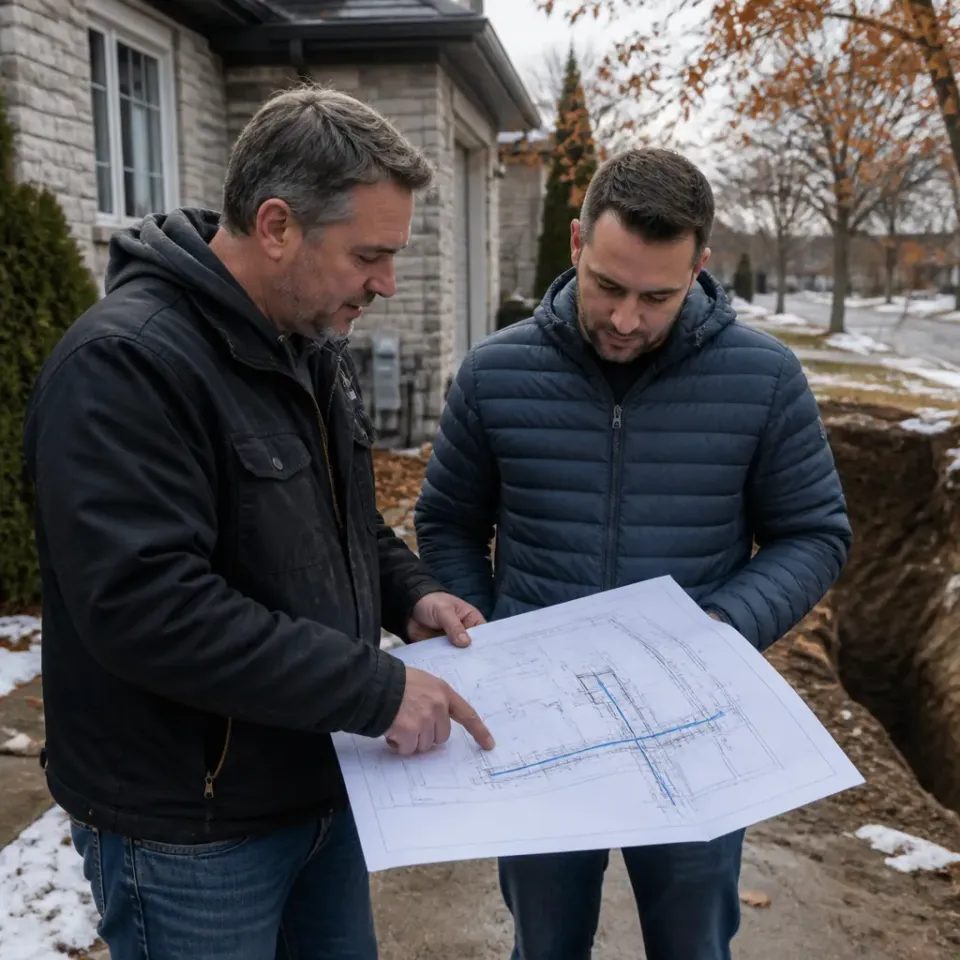
The City of Ottawa says severe, uninterrupted cold can freeze a water service pipe and interrupt water to the home's internal plumbing. Its current guidance tells residents to report a frozen service pipe to 3-1-1. It also says that if you have no water and have not received a service notice, contact 3-1-1. Check the City's no-water and interruption instructions for current notices and next steps.
If only one sink or fixture is affected, other taps still run, or you can see an indoor pipe in an unheated area, an indoor branch may be involved. If every fixture has stopped, treat that as a reason to call the City rather than as proof that the buried service has frozen. For a broader first-response checklist, see our Ottawa plumbing emergency guide; this page focuses on the City-specific frozen water-service process.
Ottawa frozen water service: a four-step response
Use this sequence to separate a possible municipal service issue from a freeze in a pipe inside the home.
Check for a notice
Look for a City door notice or seasonal letter. If water is off and no notice explains why, contact 3-1-1.
Identify the scope
Note whether one fixture or the whole property is affected. Treat this as a clue, not a diagnosis.
Prepare safe access
Clear snow from the outside shut-off and clear a path to the indoor shut-off if it is safe to do so.
Follow the right process
Report a suspected frozen service to the City; use cautious electric heat only for an accessible indoor frozen section.
Frozen service pipe or frozen pipe inside the home?
A water service pipe is the underground connection between the City water main and a building's plumbing. A home also has interior supply pipes that branch from the meter and shut-off area to sinks, showers, toilets, and appliances. Both can be affected by cold, but the responsibility and response are different. Ottawa's frozen water service pipe page describes the municipal service process; it should not be confused with an indoor pipe repair.
| What you notice | What it might mean | First step |
|---|---|---|
| One tap or one area has no flow | A local fixture valve or indoor branch could be involved. | Check other taps and look for a safely accessible exposed indoor pipe. |
| No water throughout the property | A service interruption or frozen water service is possible; symptoms alone do not confirm it. | Check City notices and call 3-1-1 if there is no notice. |
| Water returns but a pipe is wet | A crack may have appeared as a pipe thawed. | Shut off water if safe and arrange a plumbing assessment. |
| City notice advises running water | The City has identified your property as vulnerable under its seasonal process. | Follow the address-specific notice and contact 3-1-1 with questions. |
Write down when the water stopped, which fixtures are affected, whether neighbours have the same issue, and whether the City left a notice. That information makes a 3-1-1 call or plumbing service request clearer. If the issue is actually a persistent leak rather than a freeze, our guide to finding hidden water leaks in Ottawa homes explains signs worth documenting.
How Ottawa handles a frozen water service pipe
The City monitors winter conditions and may send seasonal run-water advisories to properties it considers vulnerable when frost reaches a specified depth. If the service freezes, the City says its crews work to restore service. To report a frozen service pipe, residents are directed to call 3-1-1. Wait times vary with the number of requests, so ask 3-1-1 about current service timing rather than relying on an old post or a neighbour's prior experience.
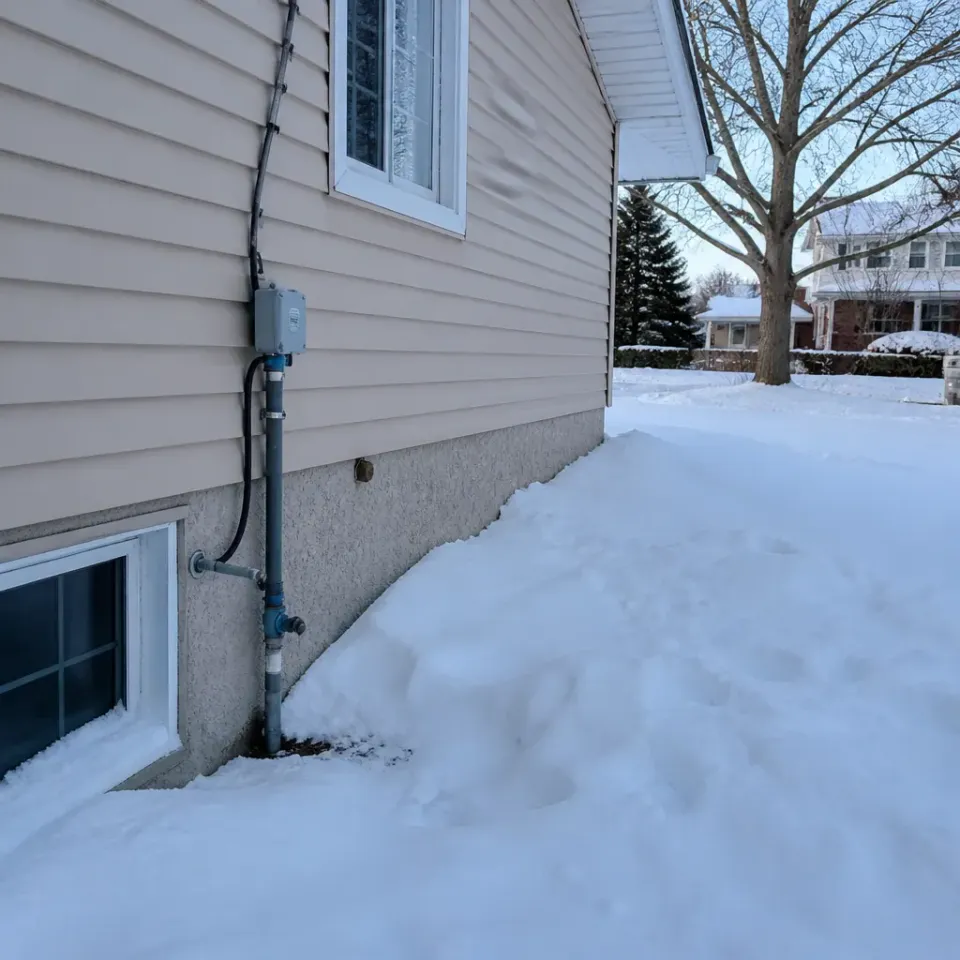
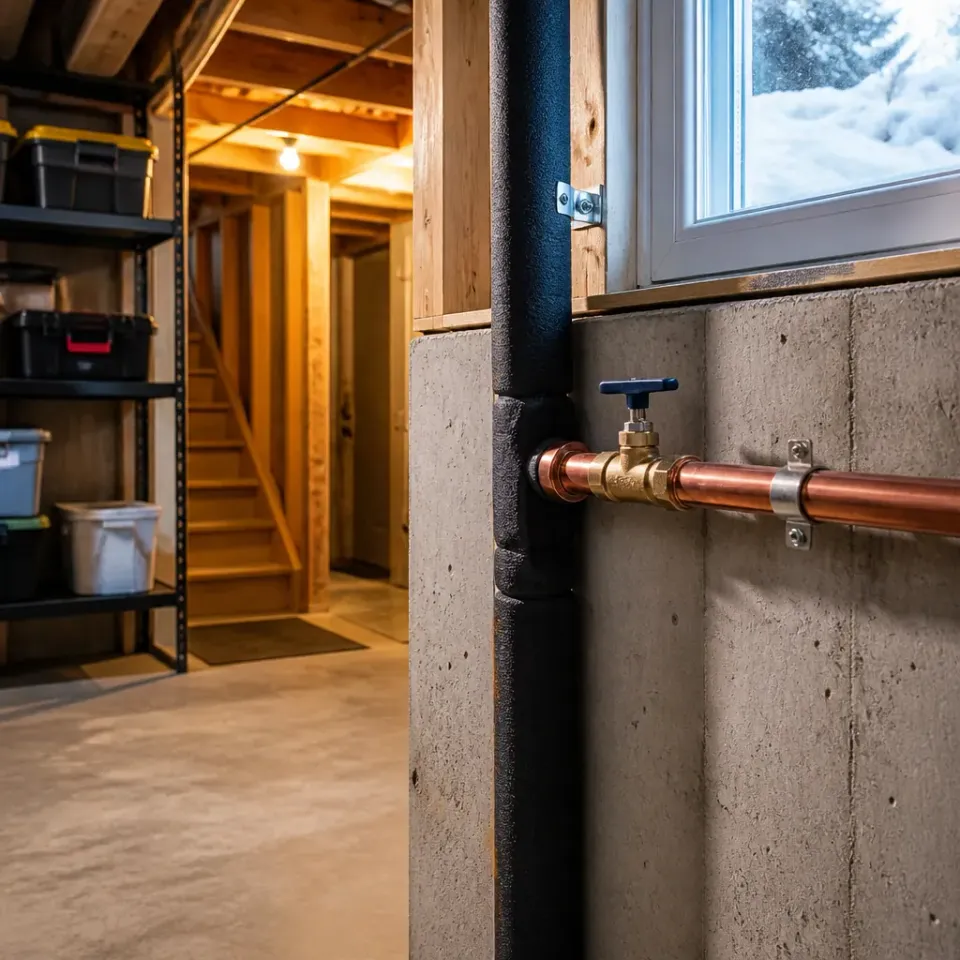
Before a crew attends, Ottawa asks residents to locate and clear snow from the outside shut-off and to clear a path to the indoor shut-off, moving furniture and breakables away from the immediate area. These steps are practical because workers need access to the controls and the route between them. Do not remove a valve cover or force a control you cannot identify; if you are uncertain, tell the City when you call.
The City publishes different thawing charges depending on whether the frozen service is on municipal or private property: the page says there is no charge to the owner for a municipal-property thaw, while private-property thawing is charged at the cost of the work plus 15%. The same page says residents on private streets, including condominium corporations, do not have access to its inspection or thawing services. These details describe the City's thawing service, not a universal estimate for excavation or pipe replacement. Confirm how the current rules apply to your address with 3-1-1.
If the water service needs planned work after the immediate freeze is resolved, read our separate guide to Ottawa water service line repair responsibilities and planning. It covers the public/private boundary, locating, and approval questions without replacing the City's live instructions for an active outage.
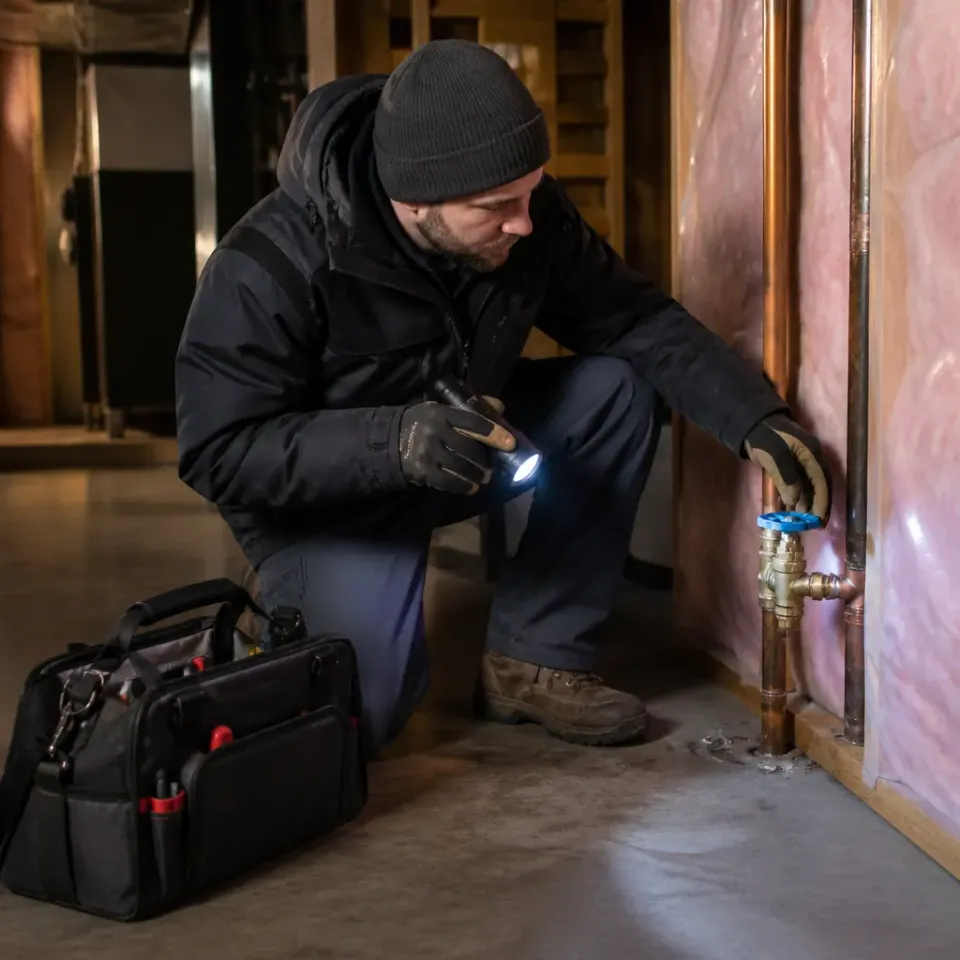
Safe steps for a frozen pipe inside the house
Ottawa's instructions for manual thawing apply when you can determine that the frozen section is inside the home. The City recommends opening the nearest cold-water tap so you can tell when flow returns. It lists an electric heating pad wrapped around the pipe or an electric hair dryer as possible heat sources, and says to use a portable heater cautiously, especially around flammable material. Keep rooms and crawl spaces containing plumbing adequately heated. Never use an open flame.
First make sure the pipe and surrounding area are accessible, dry, and away from electrical hazards. Warm the area gradually and stay with any appliance in use. Do not point heat at combustible material, attempt to thaw inside a closed wall, or use a device whose instructions prohibit the setup. If you see a split, a bulging pipe, a leak, or water near electrical equipment, stop. Safety comes before restoring flow; leave the area if there is an electrical or other life-safety hazard.
If an accessible pipe does not respond or you cannot identify the frozen section, call a licensed plumber. A Toronto municipal safety page also cautions against open-flame thawing and unattended heat sources; Ottawa residents should treat Ottawa's current instructions as the local authority. Our separate frozen-pipe repair service page explains how to request help when the problem is inside a home.
What an Ottawa run-water notice means
A City run-water notice is not a general recommendation to leave every tap running all winter. Ottawa sends a seasonal letter to vulnerable properties, and recipients should follow the instructions for their address. The published City page explains that a steady stream may be required until frost has left the ground, but one version of its page has an inconsistent conversion between inches and centimetres. We therefore do not reproduce a numeric stream width or assume a universal end date here. Use the latest notice or ask 3-1-1 to confirm the current instructions.
The letter may also explain how water use is billed in the property's situation. Do not substitute another municipality's policy: charges, eligibility, and advisories can differ. If a notice is unclear, call the City before starting or stopping a continuous flow. If water usage changes unexpectedly, note the meter reading and ask Ottawa about the account-specific billing instructions.
This is a good time to add the service-line issue to a maintenance record: keep the notice, the date, any City contact number, the steps taken, and the outcome. The record is useful if the line freezes again or if a plumber later inspects the home's supply. Ottawa says it cannot provide a property-specific prediction of private service-line failure from age alone, so a prior freeze is a reason to ask for the property's history and options, not a guarantee of what will happen next winter.
Preventing frozen pipes in Ottawa homes
Prevention starts with the places where warm indoor air does not reach plumbing: exterior-wall cabinets, crawl spaces, garages, utility rooms, and basement areas near foundation penetrations. Ottawa advises keeping indoor air above 8°C in areas containing water pipes, especially near the meter; insulating vulnerable pipes; and sealing air leaks in the home and garage. Those are general protective steps, not a substitute for a City advisory on a known vulnerable service.
Before temperatures drop, locate the indoor shut-off and make sure household members know how to access it. Store boxes and furniture so they do not block it. If a valve is seized, corroded, or difficult to reach, do not wait for an emergency to discover that. A plumber can assess an inaccessible or non-functional indoor shut-off. Homeowners planning broader work can also schedule an annual plumbing inspection in Ottawa and ask about exposed lines, drafts, and the service history.
- Seal cold air leaks around foundation openings, garage walls, and pipe penetrations.
- Insulate accessible pipes in unheated or drafty spaces with products suitable for their location.
- Keep the room and crawl-space temperature stable where plumbing runs; ask the City about its 8°C guidance for pipe areas.
- Clear access to shut-offs and the water meter before snow, storage, or renovations block the route.
- If Ottawa sends a run-water letter, follow that property's instructions and ask the City about anything unclear.
Do not rely on a thermostat setting in one room to protect every pipe. A closed cabinet against an exterior wall, an unheated addition, or a draft near the foundation can remain colder than the thermostat area. If the same section has frozen before, keep the notice and ask a qualified professional to assess the actual pipe route rather than adding insulation blindly over damp or damaged materials.
What to check after water returns
Water returning is good news, but it does not prove that every pipe is intact. A pipe may leak as ice melts, especially at a joint or weak section. Look for new damp spots, dripping sounds, water around the meter, a change in water pressure, or a fixture that no longer behaves normally. Check the immediate areas you can safely see, but do not open walls or enter a flooded area to inspect hidden plumbing.
If you see water actively escaping, close the indoor main shut-off if you can do so safely, protect people from electrical hazards, and contact an emergency plumber. If the leak is hidden, discoloured water, a sudden pressure change, or a persistent meter movement may call for a diagnostic visit; see our Ottawa leak-detection service for how that assessment works. Record when the water returned and where you observed any change.
If the water was restored by City crews, follow their instructions about the service. If the freeze happened inside the home, have a damaged or inaccessible section assessed before closing it behind finished walls. Keep the City notice, plumber invoice, photos, and any repair notes together; these documents can make the next winter's conversation much more specific.
When the City is the first call—and when a plumber is
Call Ottawa 3-1-1 for a suspected frozen municipal water service pipe, a whole-property loss of water without a notice, or questions about an address-specific run-water advisory. The City's current web page is the best place to verify its process because seasonal arrangements and wait times may change. A plumber is the right contact for an indoor frozen branch, a burst pipe, an unreliable interior shut-off, or a leak after thawing. The two calls are not interchangeable; a plumber cannot determine the City's service queue or account-specific advisory terms.
If you need professional indoor repair options, Plumbing Now publishes a dedicated local frozen-pipe repair service in Ottawa. Check service availability, credentials, quote terms, and the scope of work directly with any company before booking. A service page is not a substitute for City instructions when the underground municipal service may be involved.
For active leaks or water damage that cannot be isolated, use the household emergency plan in our guide to plumbing emergencies Ottawa homeowners should not ignore. If water is near electrical equipment or there is another immediate hazard, leave the area and contact emergency services. Do not risk injury to save a pipe.