Key Takeaways
- The most expensive leaks are the ones you never see — they run around the clock behind walls, under floors, and underground.
- A rising water bill, the sound of running water, musty odours, and warm or damp floor spots are the earliest warning signs.
- The water meter test is the fastest way to confirm a hidden leak yourself in under two hours.
- Professionals use acoustic listening, thermal imaging, camera inspection, and dye tests to pinpoint leaks without tearing up your home.
- Ottawa's freeze-thaw cycles, hard water, and aging pipes in older neighbourhoods make hidden leaks a year-round risk.
Why Hidden Leaks Are So Costly
Of all the plumbing problems that affect Ottawa homes, a hidden water leak is the one that quietly does the most damage. A burst pipe announces itself instantly — water everywhere, an obvious emergency, an immediate call to a plumber. A hidden leak does the opposite. It drips slowly behind a wall, under a slab, or inside a ceiling cavity for weeks or months before anyone notices, and by the time it surfaces, the repair bill has multiplied many times over.
The reason hidden leaks are so expensive comes down to what they touch. A small, steady leak keeps drywall, insulation, subfloor, and framing continuously wet. That moisture does three things at once: it feeds mould and mildew, it rots wood and softens structural materials, and it warps floors and finishes. What began as a pinhole in a copper line can end as a full drywall replacement, a mould remediation project, and a floor that has to be torn out and rebuilt.
There is a financial sting on top of the physical damage. A leak wastes water you are paying for every day, and it can push a water bill up by a startling amount before you connect the dots. Worse, many insurance policies treat slow, ongoing leaks differently from sudden bursts, which means a leak you should have caught earlier may not be fully covered. Learning to detect leaks early is one of the most valuable skills an Ottawa homeowner can develop, and it is the focus of this guide. When a leak is beyond DIY, our professional leak detection service can locate it without tearing your home apart.
10+ Warning Signs of a Hidden Leak
Hidden leaks may be out of sight, but they almost always leave clues. The earlier you recognize them, the smaller the eventual repair. Watch for any of the following:
- A rising water bill — a steady, unexplained increase from one billing period to the next is one of the most reliable early indicators.
- The water meter keeps moving — when every fixture is off, the meter should be still. If it creeps, water is escaping.
- The sound of running water — a faint trickle, hiss, or drip inside a wall when the house is quiet and nothing is running.
- A musty, earthy smell — the telltale odour of damp, mould, or mildew concentrated in one room or near one wall.
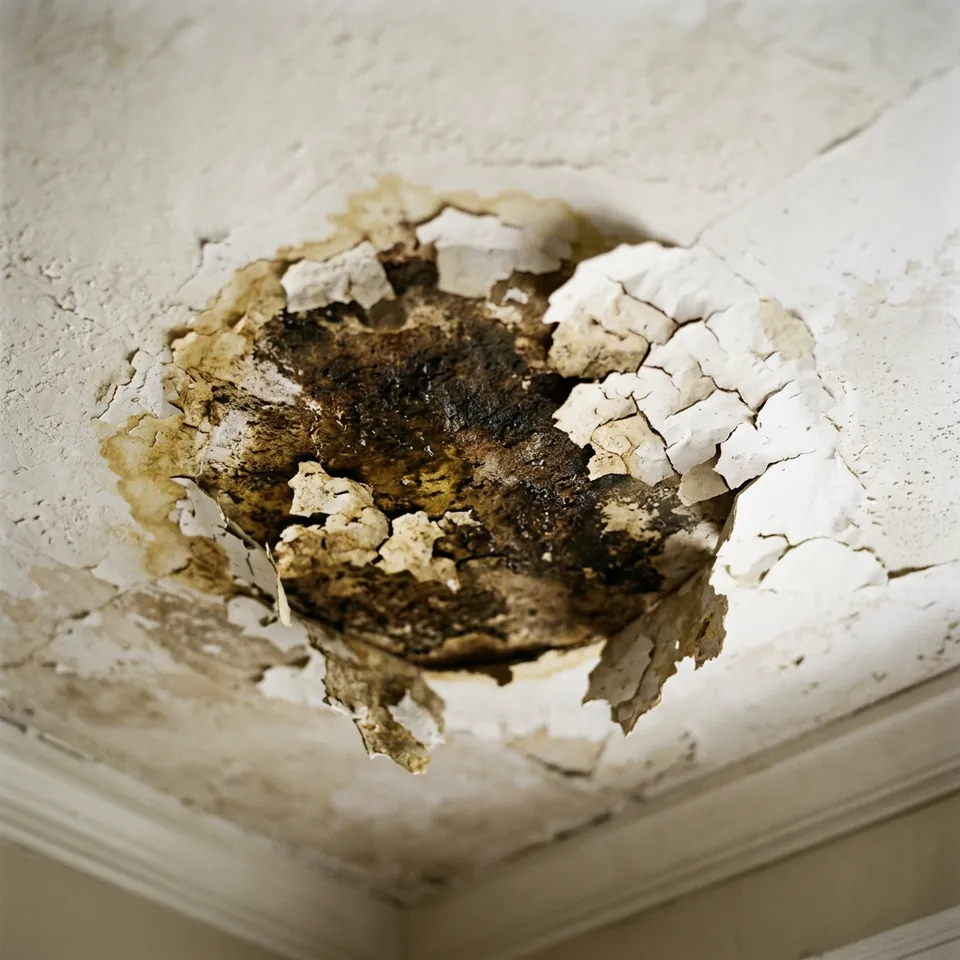
- Stains on ceilings or walls — yellow, brown, or copper-coloured rings and discolouration that grow over time.
- Peeling, bubbling, or blistering paint or wallpaper — moisture behind a surface lifts finishes away from the wall.
- Warm spots on the floor — a patch of flooring that feels warmer than the rest can indicate a hot water line leaking beneath a slab.
- Damp, soft, or warped flooring — buckling laminate, lifting tile grout, or a spongy subfloor with no spill to explain it.
- A sudden drop in water pressure — a leak upstream steals pressure from your fixtures.
- Mould or mildew in unexpected places — growth appearing away from showers or windows points to a hidden moisture source.
- Puddles, dampness, or efflorescence on the foundation — the white, chalky mineral residue on concrete signals moisture movement.
- Persistent condensation or humidity — an area that never seems to dry out even with ventilation.
Hidden Leaks by the Numbers
The DIY Water Meter Test
The single most useful thing you can do to confirm a hidden leak costs nothing and takes about two hours. The water meter test uses your own meter as a leak detector. If water is moving through the system while everything is shut off, there is a leak somewhere. Here is how to do it properly.
Turn off all water use
Shut off every tap, the dishwasher, the washing machine, ice makers, humidifiers, and any irrigation. Ask the household to hold off on flushing toilets and running water for the duration of the test.
Locate and read your water meter
In most Ottawa homes the meter is in the basement near where the municipal supply enters. Record the exact reading, and note the position of the small low-flow leak indicator dial or triangle if your meter has one.
Wait one to two hours
Leave the home undisturbed and use no water at all during this window. The longer you wait, the easier it is to detect a very slow leak, so a full two hours is ideal.
Read the meter again
If the reading has changed or the leak indicator has moved, water is escaping somewhere in your plumbing — you have confirmed a leak. If nothing moved, the system held and any problem is likely intermittent.
Narrow it down
To separate an indoor leak from an underground supply-line leak, close the main shut-off valve inside the home and repeat the test. If the meter still moves, the leak is between the meter and the house; if it stops, the leak is inside.
This test tells you whether a leak exists and roughly where to look, but it will not pinpoint the exact spot behind a wall or under a slab. That is where professional tools take over. If your test confirms a leak you cannot locate, it is time to bring in our leak detection specialists before the damage spreads.
Room-by-Room Inspection Checklist
Once the meter test confirms water is moving, a methodical walk through the home often turns up the source. Work through each area slowly, using a flashlight and your nose as much as your eyes.
Bathrooms
Bathrooms are the leading source of hidden leaks. Check the base of every toilet for softness or discolouration, and run a dye test in each tank — add a few drops of food colouring to the tank, wait fifteen minutes without flushing, and see if colour appears in the bowl. If it does, the flapper is leaking silently. Inspect the caulking around tubs and showers, the supply lines under sinks, and the ceiling of any room directly below a bathroom.
Kitchen and laundry
Open the cabinet under the kitchen sink and feel for dampness around the supply valves, the P-trap, and the dishwasher connection. Check behind and beneath the refrigerator if it has a water line for the ice maker. In the laundry area, examine the rubber hoses feeding the washing machine — a common failure point — and look for staining on the wall behind it.
Basement and utility areas
The basement is where hidden leaks most often reveal themselves. Inspect the water heater and its connections for corrosion or moisture, follow visible supply lines for green corrosion on copper or beads of water at fittings, and check around the sump pit and floor drains. Look for water stains, efflorescence, or rust on the foundation walls and floor. While you are down there, confirm your sump pump is working, since a hidden leak and a failing pump together can flood a finished basement quickly.
Outdoors and exterior walls
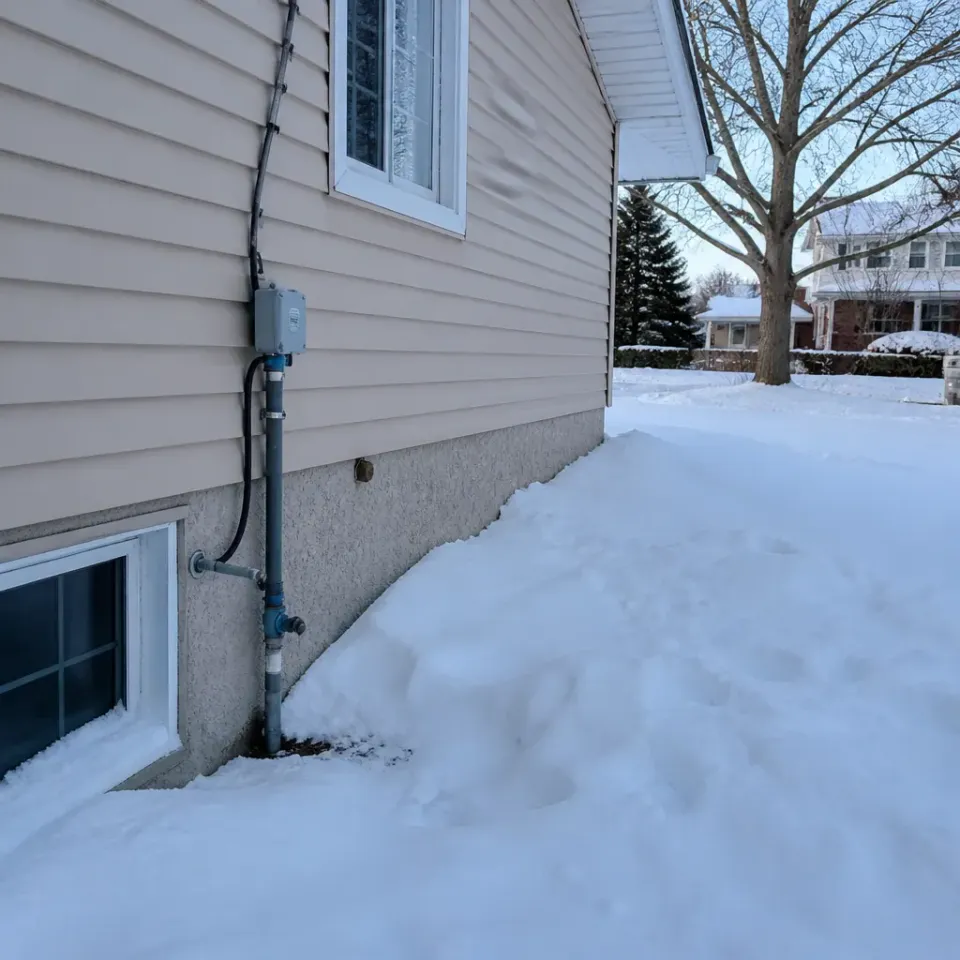
Do not forget outdoor spigots, hose bibs, and irrigation lines, especially after winter when a freeze can crack a fitting. An unusually green, spongy, or sunken patch of lawn over the path of your service line can point to an underground supply leak. Exterior walls in older Ottawa homes are also common freeze points, so pay close attention to any staining on the inside of an outside wall.
Reading a High Water Bill
A rising water bill is often the first hard evidence of a hidden leak, but only if you know how to read it. Compare your consumption against the same billing period from previous years rather than the previous month, since seasonal habits — filling a pool, watering a garden, extra houseguests — can explain short-term jumps. A genuine leak shows up as a sustained increase that does not track with anything you have changed.
The City of Ottawa bills for both water and wastewater based on metered consumption, so a leak effectively costs you twice for the same wasted water. Even a slow drip adds up: a leak that seems trivial can quietly waste hundreds or thousands of litres over a billing cycle. If your bill has climbed and you cannot account for it, treat the number as a signal to run the water meter test and start your room-by-room inspection.
How Professionals Find Hidden Leaks
When a leak is confirmed but cannot be seen, professional leak detection finds it without demolishing your home. The goal of modern, non-invasive detection is to pinpoint the exact location so a repair can be made through the smallest possible opening. Here are the main methods a professional will reach for.
Acoustic leak detection
Pressurized water escaping through a pipe makes a distinctive sound. Using sensitive ground microphones and listening discs, a technician can hear that hiss or gurgle through walls, floors, and even concrete, and follow it to the loudest point directly above the leak. Acoustic detection is remarkably precise on pressurized supply lines and is often the first tool out of the kit.
Thermal imaging
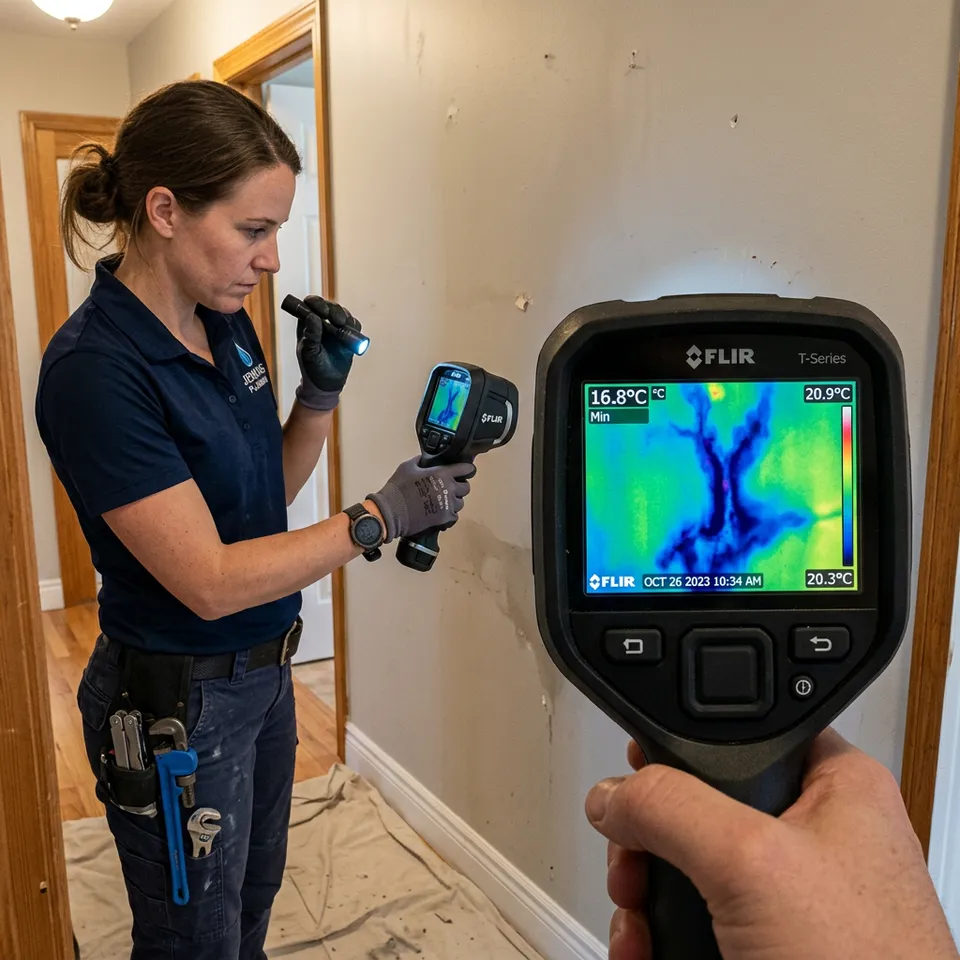
An infrared camera reads surface temperature differences that the eye cannot see. Because water at a leak is at a different temperature than the surrounding materials — a hot line shows up warm, a cold line or evaporating moisture shows up cool — thermal imaging maps the wet area behind a wall or under a floor without a single hole. It is especially valuable for tracing where water has spread.
Camera inspection
For drain, sewer, and larger lines, a waterproof camera on a flexible cable travels inside the pipe and sends live video back, revealing cracks, root intrusion, corrosion, and blockages exactly where they are. Our camera inspection service is the standard tool for diagnosing hidden problems in buried and inaccessible drain lines.
Dye and pressure testing
Coloured dye traces the path of water in toilets, drains, and suspected seepage points, while a pressure test isolates a section of piping and monitors whether it holds — a definitive way to confirm a leak in a specific run of pipe. Combined, these methods let a professional confirm the source with confidence before opening anything up.
Slab Leaks & Underground Lines
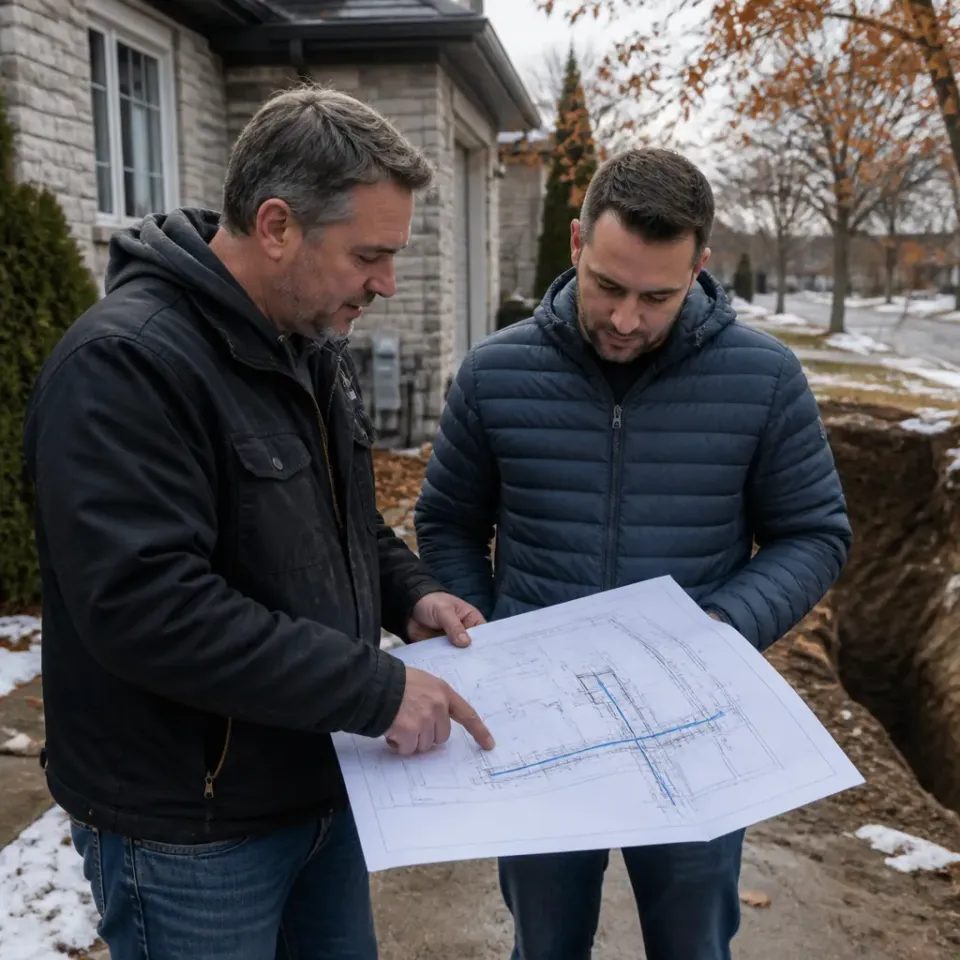
Some of the most challenging hidden leaks occur where you cannot reach them at all: beneath a concrete slab or in the buried service line between the street and the house. A slab leak is a leak in a water line running under or within a home's foundation. Because the water is trapped under solid concrete, it can erode the soil beneath the slab, undermine the foundation, and cause cracks and heaving long before the leak is obvious.
Classic signs of a slab leak include a warm spot on the floor from a leaking hot water line, unexplained cracks in flooring or walls, damp or lifting flooring with no spill to blame, the sound of running water beneath the floor, and a stubbornly high water bill. Detecting a slab leak reliably takes professional acoustic and thermal equipment, since guessing wrong means jackhammering the wrong part of your foundation.
Underground supply-line leaks show up as soggy or unusually lush patches of lawn, low pressure throughout the house, and a meter that keeps moving even after the interior main valve is closed. Whether the culprit is a slab leak or a buried line, these situations call for professional detection and often relate to broader sewer and service line work. Catching them early is the difference between a targeted repair and a foundation problem.
Mould, Rot & Insurance Claims
The real cost of a hidden leak is rarely the water itself — it is everything the water damages along the way. Understanding the chain of consequences underscores why early detection pays for itself many times over.
Mould and indoor air quality
Mould needs only moisture and an organic surface, and it can begin growing within a day or two of material staying wet. A hidden leak provides a constant moisture supply in the dark, undisturbed spaces mould loves. In Ottawa's humid summers and tightly sealed winter homes, that moisture has little chance to dry out. The result can be widespread mould inside walls and under floors, degrading indoor air quality and, in some cases, requiring professional remediation that costs far more than the plumbing repair.
Structural rot
Continuous moisture also rots the wood framing, subfloor, and sheathing that hold your home together. Rot weakens joists and studs, warps floors, and can spread well beyond the original leak. What could have been a simple fitting repair becomes carpentry, drywall, flooring, and finishing work.
The insurance angle
Insurance is where hidden leaks catch homeowners off guard. As the Insurance Bureau of Canada notes, policies generally cover sudden and accidental water damage but often exclude damage from gradual, ongoing leaks and deferred maintenance. In other words, a pipe that bursts unexpectedly is usually covered, but a slow leak that ran for months — one you arguably should have noticed — may not be. That distinction is the strongest possible argument for regular inspections, prompt attention to warning signs, and keeping records of the maintenance you do.
Ottawa-Specific Leak Risks
Generic leak advice misses what makes Ottawa homes uniquely vulnerable. Our climate, water chemistry, and housing stock all conspire to create hidden leaks that homeowners elsewhere rarely face.
Freeze-thaw pipe stress
Ottawa's deep winters put enormous stress on plumbing. Water expands as it freezes, and a pipe that partially freezes in an exterior wall, an unheated crawl space, or a garage can develop cracks and pinhole leaks that only reveal themselves when the pipe thaws. In neighbourhoods like Barrhaven, Kanata, and Stittsville, where newer subdivisions still contain long runs of piping through cold zones, a freeze-related pinhole can leak inside a wall for weeks after winter. A pipe that freezes solid may become a burst pipe emergency, while a partial freeze often leaves a slow, hidden leak behind. Our guide to frozen pipe repair covers prevention in detail.
Hard water and corrosion
Much of the Ottawa region contends with moderately hard water, and homes on private wells in areas like Greely, Manotick, and Riverside South often see even higher mineral content. Over years, that mineral load corrodes and scales the inside of pipes, thinning walls and creating the pinhole leaks that are so hard to find. Fittings and water heaters wear faster, too, which is why our water heater specialists see so many corrosion-driven leaks in the region.
Aging pipes in mature neighbourhoods
Established Ottawa communities such as Westboro, Alta Vista, Centretown, Nepean, and Vanier feature beautiful older homes — and older plumbing. Aging galvanized steel and early copper lines corrode from the inside out, and decades-old fittings simply reach the end of their service life. Combined with mature trees whose roots seek out moisture, older neighbourhoods see a higher rate of both hidden supply leaks and drain-line infiltration.
Spring melt masks basement leaks
Spring in Ottawa brings rapid snowmelt and a saturated water table, and areas from Orleans and Gloucester to Beacon Hill and Findlay Creek regularly deal with damp basements. The trouble is that seasonal groundwater dampness can mask an actual plumbing leak — homeowners blame the melt and miss a real problem festering underneath. If your basement stays wet after the ground has dried, do not assume it is just the season; run the meter test and inspect your supply lines.
When to Call a Professional
DIY detection is powerful, but some situations call for professional equipment and experience. Call a licensed plumber when:
- The meter test confirms a leak you cannot locate — hidden leaks behind walls or under slabs need acoustic and thermal tools.
- You see warm floor spots or foundation cracks — possible slab leak that requires precise detection before any concrete is opened.
- Water is actively damaging your home — spreading stains, soft floors, or mould mean the clock is running.
- The meter keeps moving with the main valve closed — the leak is in the underground service line.
- There is any sign of an active flood or burst pipe — this is an emergency, not a detection job.
If a hidden leak has turned into an active flood, shut off your main water valve and call for help immediately — our 24/7 emergency plumbers respond around the clock. For non-emergency detection and repair, our team and the trusted plumbing specialists at Plumbing Now use non-invasive tools to find leaks fast and fix them right.
Leak Detection & Repair Costs in Ottawa
Costs vary with the tools required, how difficult the leak is to access, and the scope of the repair. The figures below give a realistic 2026 Ottawa range to help you plan.
| Service | Typical Cost (2026) |
|---|---|
| Non-invasive leak detection (acoustic / thermal) | $250 – $650 |
| Camera inspection (drain / sewer line) | $250 – $500 |
| Accessible pipe or fitting repair | $250 – $600 |
| In-wall leak repair (incl. drywall access) | $500 – $1,500 |
| Slab leak detection & repair | $1,500 – $4,500+ |
| Underground service line repair | $2,000 – $6,000+ |
The pattern is consistent: the earlier you catch a leak, the cheaper the whole job. A detection call plus an accessible repair is a fraction of the cost of a slab leak that has undermined a foundation or a slow leak that has grown into a mould-remediation project. For a broader breakdown of local pricing, see our Ottawa plumbing cost guide.
How to Prevent Hidden Leaks
Prevention is cheaper and less stressful than any repair. A handful of habits and inexpensive devices dramatically reduce the odds of a hidden leak taking hold in your home.
- Install smart leak detectors — place puck sensors near the water heater, washing machine, sump pit, and under sinks, and consider a whole-home device that can shut off the main automatically.
- Regulate your water pressure — pressure above roughly 550 to 600 kPa (80 psi) stresses pipes and fittings. A pressure-reducing valve protects the whole system.
- Insulate pipes in cold zones — wrap lines in unheated basements, crawl spaces, garages, and exterior walls before winter to prevent freeze-related leaks.
- Know your main shut-off — every adult in the home should know where it is and how to close it fast in an emergency.
- Replace aging supply hoses — swap rubber washing-machine and appliance hoses for braided stainless steel and replace them every few years.
- Watch your water bill — treat any unexplained increase as an early warning and run the meter test.
- Schedule pre-winter maintenance — an annual inspection catches corrosion, worn fittings, and vulnerable pipes before the cold sets in.
A little vigilance goes a long way. The homeowners who avoid catastrophic water damage are simply the ones who notice the small signs early and act on them. If anything in your inspection raises a question — or the meter test confirms a leak you cannot find — reach out and we will locate it before it costs you more.