Key Takeaways
- Plumbing is a compulsory trade in Ontario — always hire a Certified Journeyperson, and confirm a TSSA gas licence for any gas work.
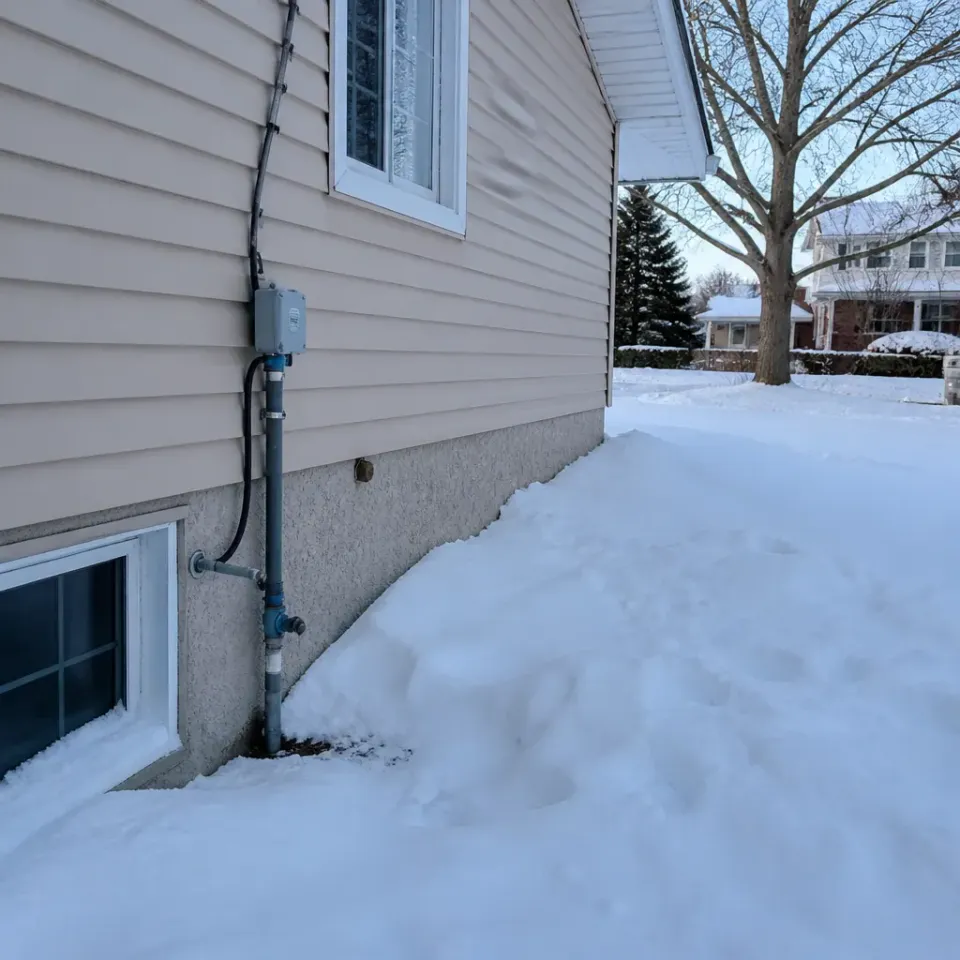
- Ottawa's climate creates two peak-risk seasons: frozen and burst pipes in winter, and basement flooding from snowmelt in spring.
- Expect a service call fee of $90–$150 plus hourly ($100–$180) or flat-rate pricing; get written quotes for larger jobs.
- Older neighbourhoods face tree root intrusion and aging pipes; newer builds face different issues like settling and builder-grade fixtures.
- A yearly inspection and simple seasonal maintenance prevent the majority of expensive plumbing emergencies.
Plumbing in Ottawa: What Every Homeowner Should Know
Owning a home in Ottawa means owning a plumbing system that has to work hard against one of the more demanding climates in Canada. Our winters push pipes to their limits, our spring thaws test every basement and sump pump, and our mix of century-old character homes and brand-new subdivisions means no two plumbing systems are quite alike. Whether you have just bought your first place in Barrhaven or you have looked after a heritage home in Centretown for decades, understanding how plumbing services work — and how to hire the right professional — protects your home and your budget.
This guide is written from the perspective of licensed plumbers who work in Ottawa homes every day. It covers the full range of residential plumbing services, how Ontario's licensing system actually works, realistic 2026 pricing, a season-by-season maintenance calendar built specifically for the local climate, and the neighbourhood-specific quirks that shape what your home needs. The goal is simple: to help you make confident, informed decisions rather than reacting in a panic when something goes wrong at the worst possible moment.
Ottawa homeowners deal with a distinctive set of challenges — frozen pipes in January, basement flooding during the April melt, hard-water scale on fixtures, aging clay sewer laterals in established areas, and tree root intrusion where mature maples and elms line the streets. A plumber who genuinely understands the region will factor all of this into the advice they give you. Throughout this guide we will point you to the specific services and resources that address each of these concerns.
The Full Landscape of Residential Plumbing Services
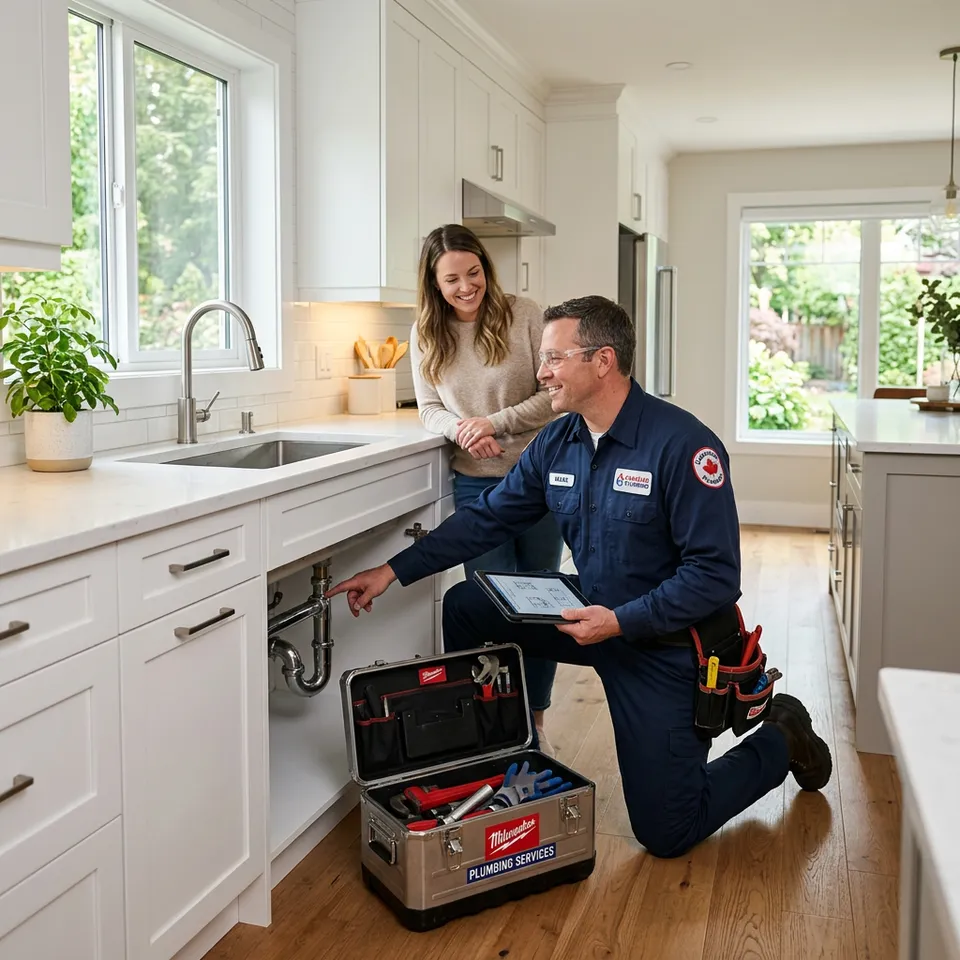
"Plumbing service" is a broad umbrella. When homeowners picture a plumber, they often think only of a dripping tap — but the trade spans everything from a five-minute repair to a multi-day sewer replacement. Understanding the categories helps you describe your problem accurately and get to the right specialist faster.
Repairs and fixture work
This is the bread and butter of residential plumbing: leaking faucets, running toilets, dripping shut-off valves, worn cartridges, faulty fill valves, and loose or corroded connections. These jobs are usually quick but add up fast when ignored — a running toilet alone can waste hundreds of litres a day. Fixture installation, from a new kitchen sink to a rainfall shower head, also falls into this category and is one of the most requested services across neighbourhoods like Kanata and Orleans.
Drain cleaning and clog removal
Slow or blocked drains are among the most common calls we receive. Kitchen drains clog with grease, bathroom drains with hair and soap scum, and main lines with everything from wet wipes to invading tree roots. Professional drain cleaning in Ottawa uses motorized augers and, for stubborn cases, high-pressure water jetting that clears the full diameter of the pipe rather than punching a small hole through the blockage.
Water heaters
Whether you run a conventional tank or a tankless unit, the water heater is the workhorse of your home. Services range from thermostat and element repairs to full replacement and conversions. Our water heater repair service covers both, and if you are weighing repair against replacement, the age and type of your unit are the deciding factors.
Sewer, sump pumps and water protection
The systems that protect your home from the worst water damage often go unnoticed until they fail. A sump pump keeps your basement dry during heavy rain and spring melt, while sewer line repair addresses collapsed, cracked, or root-infested lines. A camera inspection is the diagnostic tool that lets a plumber see inside your pipes and pinpoint problems without digging.
Leak detection and emergency response
Hidden leaks quietly cause enormous damage. Professional leak detection uses acoustic and moisture-sensing equipment to find leaks behind walls and under slabs. And when disaster strikes — a burst pipe, a sewer backup, a flooding basement — a dependable emergency plumber in Ottawa available 24/7 is worth their weight in gold.
Ottawa Plumbing at a Glance
How Plumbing Licensing Works in Ontario
One of the most important things an Ottawa homeowner can understand is that plumbing is a compulsory trade in Ontario. That is not a marketing phrase — it is a legal designation. It means that a person performing plumbing work for compensation must hold a Certificate of Qualification as a Certified Journeyperson, or be a registered apprentice working under the supervision of one. This protects you: a licensed plumber has completed thousands of hours of on-the-job training and passed a provincial examination.
What is a Certified Journeyperson?
A Certified Journeyperson plumber has completed a formal apprenticeship — typically several years of supervised, paid work combined with in-school technical training — and passed a certification exam. This is the credential that legally allows someone to perform plumbing work independently in Ontario. When you hire, you are entitled to ask whether the person doing the work holds this qualification, and a legitimate company will confirm it readily.
Why gas work requires a separate TSSA licence
Plumbing and gas fitting are related but separately regulated. Any work involving natural gas — installing or connecting a gas water heater, moving a gas line, or servicing gas appliances — requires a technician licensed by the Technical Standards and Safety Authority (TSSA). A plumbing licence alone does not authorize gas work. If your project touches gas, make sure the person performing it holds the appropriate TSSA gas credential; this is a safety matter, not a formality.
Insurance and WSIB coverage
Beyond trade certification, a reputable plumbing company carries commercial liability insurance and, for its employees, coverage under the Workplace Safety and Insurance Board (WSIB). Liability insurance protects you if something goes wrong during the work, and WSIB coverage protects you from liability if a worker is injured on your property. Hiring an uninsured "handyman" to save a few dollars can expose you to significant financial risk — a genuine bargain is never one that transfers all the risk onto you.
When you work with established, licensed Ottawa plumbers such as Plumbing Now, all of these credentials come standard — proper certification, insurance, and accountability are simply part of how professional companies operate.
How to Vet and Hire a Plumber in Ottawa
Choosing a plumber is one of those decisions that feels straightforward until you are staring at a wet floor at eleven at night. A little preparation ahead of time — knowing what to look for and what questions to ask — makes the whole process far less stressful. Work through the steps below whether you are booking routine maintenance or responding to an urgent problem.
Confirm licensing and insurance
Ask directly whether the plumber is a Certified Journeyperson and whether the company carries liability insurance and WSIB coverage. For any gas work, confirm a TSSA gas licence. A professional answers these questions without hesitation.
Check local reputation
Look for a genuine Ottawa presence and verifiable reviews across multiple platforms. Consistent, detailed reviews mentioning specific neighbourhoods and services are more meaningful than a handful of five-star ratings with no substance.
Get a clear, written estimate
Insist on a written quote that specifies whether pricing is flat-rate or hourly, what is included, and whether parts are extra. For larger jobs, gather two or three estimates so you understand the fair market range for the work.
Ask about warranties
A confident plumber stands behind their work with a warranty on both labour and parts. Understand the length and terms before you commit, and keep the paperwork for your records.
Trust your read of the interaction
A good plumber explains the problem in plain language, offers options rather than a single expensive path, and never pressures you. If something feels off, it is reasonable to pause and get another opinion.
For business owners and property managers, our commercial plumbing maintenance guide for Cumberland adds a workplace-focused checklist for drains, water shutoffs, backflow devices, and service records.
Red Flags: Warning Signs of a Bad Plumber
Most plumbers in Ottawa are honest professionals, but a few practices should make you walk away. Recognizing these red flags protects both your home and your wallet:
- No written estimate — vague verbal pricing that mysteriously balloons once the work begins.
- Demands full cash payment upfront — a deposit for major materials can be reasonable, but full payment before any work is a warning sign.
- Cannot or will not prove licensing and insurance — this is non-negotiable for legitimate work.
- High-pressure sales tactics — insisting you must decide on an expensive repair immediately, without time to think.
- Prices dramatically below every other quote — an unusually low bid often signals cut corners, unlicensed labour, or hidden costs to come.
- No warranty on the work — a plumber unwilling to guarantee their own labour is telling you something.
Typical 2026 Ottawa Plumbing Costs
Plumbing pricing depends on the complexity of the job, the condition and age of your pipes, how accessible the work area is, and whether it is a scheduled visit or an after-hours emergency. The table below gives realistic 2026 ranges for common residential services in Ottawa. Use it as a planning guide, not a firm quote — every home is different.
| Service | Typical Cost (2026) |
|---|---|
| Service call / diagnostic fee | $90 – $150 |
| Leaky faucet or minor repair | $150 – $350 |
| Toilet repair or rebuild | $150 – $450 |
| Drain snaking (single fixture) | $150 – $300 |
| Main line clearing / hydro-jetting | $250 – $900 |
| Water heater replacement (tank) | $1,500 – $3,500 |
| Water heater replacement (tankless) | $3,000 – $6,500 |
| Sump pump replacement | $500 – $1,500 |
| Camera inspection | $200 – $450 |
| Sewer line repair / replacement | $3,000 – $15,000+ |
| Emergency / after-hours premium | +50% – 100% |
For a deeper breakdown of what drives these numbers, see our dedicated Ottawa plumbing cost guide. The most important cost lesson is this: addressing a small problem early is almost always a fraction of the price of the water damage it causes if ignored. A $200 repair today can prevent a $15,000 insurance claim next spring.
The Ottawa Seasonal Maintenance Calendar
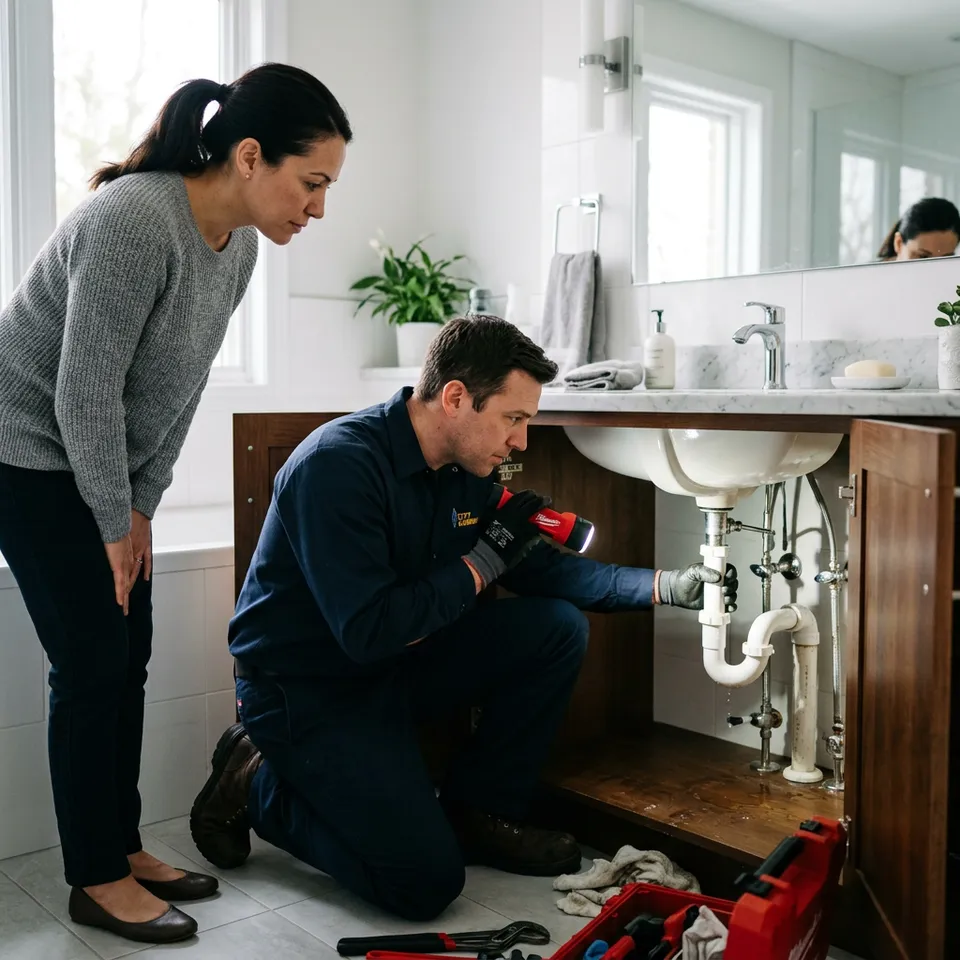
Ottawa's four distinct seasons each place different demands on your plumbing. Building a simple seasonal routine is the single most effective way to avoid emergencies. Here is a maintenance calendar tuned specifically to the local climate.
Fall: winterization is the priority
Autumn is when Ottawa homeowners prepare for months of subzero weather. Before the first hard freeze, work through a winterization checklist:
- Disconnect, drain, and store garden hoses; shut off and drain outdoor hose bibs.
- Insulate exposed pipes in the garage, crawl spaces, and along exterior walls.
- Seal air leaks near plumbing lines to keep cold drafts away from pipes.
- Have your water heater inspected before the winter demand spike.
- Know where your main shut-off valve is and confirm it turns freely.
- Consider a professional pre-winter inspection, especially for older homes.
Winter: watch for freeze warning signs
During cold snaps, keep the home heated even when away, open cabinet doors under sinks on exterior walls to let warm air reach the pipes, and let a faucet drip during extreme cold. A sudden loss of flow at one fixture in a deep freeze often means a frozen line — act before it thaws and potentially bursts. See our frozen pipe repair guidance for what to do.
Spring: snowmelt and basement flooding
The April thaw sends enormous volumes of water into the ground, and low-lying areas across the city feel it. Before the melt, test your sump pump by pouring water into the pit to confirm it activates, check the backup battery, clear the discharge line, and make sure downspouts direct water away from the foundation. In neighbourhoods like Riverside South and Findlay Creek, and anywhere near the rivers, a working sump pump is your first line of defence.
Summer: maintenance and upgrades
Summer is the ideal time for non-urgent work: descaling fixtures affected by hard water, addressing slow drains before they become blockages, planning bathroom or kitchen renovations, and tackling any repairs you deferred over winter. It is also a good window for a camera inspection of the sewer line if you have mature trees and a history of backups in areas like Alta Vista or Westboro.
When DIY Is Fine — and When to Call a Pro
Plenty of small plumbing tasks are genuinely within reach of a capable homeowner, and there is no need to call a professional for every drip. The key is knowing where the line sits — because crossing it can turn a minor issue into a flood, void your insurance, or create a code violation.
Reasonable DIY tasks
- Clearing a slow drain with a plunger or hand auger.
- Replacing a toilet flapper, fill valve, or worn faucet aerator.
- Swapping a shower head or installing a simple faucet.
- Re-caulking a tub or sink to keep water out.
- Insulating exposed pipes and winterizing outdoor taps.
Jobs that need a licensed plumber
Call a professional whenever the work involves the main water supply line, any gas connection, sewer lines, water heater replacement, anything hidden behind a wall or under a slab, or a situation where water is actively spreading. These jobs carry real risk — of injury, of major water damage, of code violations, and of voided insurance — and they frequently require permits. When in doubt, a quick call to a plumber is far cheaper than an expensive lesson.
Neighbourhood Notes: Old Homes vs New Builds
Ottawa's housing stock spans well over a century, and the age of your home is one of the biggest factors in what your plumbing needs. Understanding the typical issues in your area helps you prioritize maintenance and interpret warning signs correctly.
Older, established neighbourhoods
In areas like Centretown, Westboro, Vanier, and Glebe-adjacent streets, many homes were built decades ago and carry aging infrastructure. Common concerns include galvanized or cast-iron supply pipes nearing the end of their life, older clay sewer laterals prone to cracking, and outdated fixtures. Mature trees along these streets send roots seeking moisture into any tiny crack in a sewer line, causing recurring backups that no amount of plunging will solve. If you own an older home with big trees and repeat main-line clogs, a camera inspection is the smart diagnostic step, and knowing where your shut-off valve is for a burst pipe is essential.
Newer subdivisions
Homes in Barrhaven, Riverside South, Findlay Creek, Stittsville, and newer parts of Kanata generally have modern PEX or copper supply lines and newer sewer connections. Their challenges are different: builder-grade fixtures that wear out sooner than expected, settling that can stress connections in the first few years, and the same regional freeze and snowmelt risks as everyone else. Newer does not mean maintenance-free — sump pumps in these areas work hard every spring, and it is worth confirming yours has a backup. Homeowners across Barrhaven and the surrounding communities benefit from the same seasonal routine as everyone else in the city.
Rural and well-served properties
In outlying communities such as Greely, Manotick, and rural stretches around Gloucester, many properties rely on wells and septic systems. These homes often have harder water and require attention to well pumps, pressure tanks, and softeners. Maintenance here is less about the municipal connection and more about the health of the private system that supplies and treats the home's water.
Permits and City of Ottawa Considerations
Not every plumbing job requires a permit, but many do — and getting this right matters for safety, insurance, and the eventual sale of your home. In general, straightforward repairs and like-for-like fixture replacements do not need a permit. A plumbing permit from the City of Ottawa is typically required for new plumbing installations, relocating fixtures, adding a bathroom, and work involving the building drain or the water service line.
A key advantage of hiring a licensed plumber is that they handle permits and inspections as part of the job and ensure the work complies with the Ontario Building Code. This is not bureaucratic box-checking — code requirements exist to protect your household from contamination, backflow, and unsafe installations. When permitted work is inspected and signed off, you have documented proof that it was done correctly, which becomes important during a home sale and can matter for insurance coverage.
If you are planning a larger project — for example a bathroom renovation that moves fixtures — talk to your plumber early about permit requirements. Discovering after the fact that a required permit was skipped can be costly and time-consuming to resolve. The City of Ottawa's building and permit resources are the authoritative source for current requirements, and a good plumber will guide you through them.
Plumbing Emergencies and Winter Risks
Some plumbing problems can wait for a scheduled appointment; others cannot. Knowing the difference — and knowing what to do in the first crucial minutes — limits the damage dramatically. In Ottawa, the emergencies that cause the most harm are strongly tied to the season.
Burst and frozen pipes
When a frozen pipe thaws, the pressure released can split the pipe and send water pouring into your home. The moment you suspect a burst pipe, shut off the main water valve, open a nearby faucet to relieve pressure, and move belongings clear of the water before calling for emergency plumbing help. Prevention — insulation, sealing drafts, keeping heat on — is far easier than cleanup.
Basement flooding and sewer backups
Spring snowmelt and heavy summer storms can overwhelm drainage and cause basement flooding, while a blocked main line can push sewage back into the lowest fixtures. A failing sump pump during the melt is one of the most common — and most preventable — spring emergencies in Ottawa. Testing your pump each spring and keeping a backup power option ready is inexpensive insurance against a flooded basement.
What to keep ready
Every household should know the location of the main water shut-off valve, keep a trusted 24/7 plumber's number handy, and understand how to cut power safely if water threatens electrical equipment. These small preparations turn a potential catastrophe into a manageable situation.
Renovations, Upgrades and Water Efficiency
Beyond repairs and emergencies, plumbers play a central role in home improvement. A well-planned renovation is the ideal time to address plumbing that has been quietly underperforming — outdated pipes, inefficient fixtures, or a layout that never quite worked. Bringing a plumber in early, at the planning stage, prevents expensive surprises once walls are opened up.
Water efficiency is one of the most worthwhile upgrades for Ottawa homeowners. Modern low-flow toilets, faucets, and shower heads that carry the WaterSense label use significantly less water without sacrificing performance, lowering both your water bill and your environmental footprint. Replacing an aging, sediment-filled water heater with a right-sized modern unit also improves efficiency and reliability. If you are unsure which upgrades deliver the best return, an experienced plumber can help you prioritize based on your home's age, your household size, and your budget.
Whether you are renovating a bathroom in a heritage home in Westboro, addressing hard-water buildup with a softener in Manotick, or simply upgrading tired fixtures in a Kanata subdivision, the same principle applies: plan ahead, hire licensed professionals, and invest in quality. Good plumbing is invisible when it works — and that quiet reliability is exactly what protects your home and your peace of mind through every Ottawa season.