Bathroom Renovation Plumbing in Ottawa: What Homeowners Need to Know
A bathroom renovation is one of the most impactful home improvement projects you can undertake. It increases your home's value, improves daily comfort, and can address long-standing plumbing issues that have been causing frustration for years. But behind the beautiful tile, modern fixtures, and gleaming countertops lies the most critical component of any bathroom renovation: the plumbing.
If you are planning a bathroom renovation in Ottawa, understanding the plumbing component is essential. Plumbing typically represents 15 to 25 percent of the total renovation cost, and the quality of the plumbing work determines whether your beautiful new bathroom will function flawlessly for decades or develop leaks, drainage issues, and other problems within months of completion.
At Ottawa Plumbers, we have completed hundreds of bathroom renovation plumbing projects across Ottawa, from simple fixture swaps in condos to complete gut renovations in century homes. Whether you are renovating a master ensuite in Barrhaven, updating a basement bathroom in Orleans, or adding a new bathroom to a heritage home in the Glebe, our licensed plumbers have the experience and expertise to handle every aspect of the plumbing work.
This comprehensive guide covers everything you need to know about bathroom renovation plumbing in Ottawa, including costs, timelines, permits, common mistakes to avoid, and how to choose the right plumber for your project. Use this guide alongside our complete plumbing cost guide to plan and budget your renovation with confidence.
Why You Need a Licensed Plumber for Your Bathroom Renovation
While many aspects of a bathroom renovation can be handled by a general contractor or even a skilled DIYer, plumbing work in Ontario must be performed by a licensed plumber. This is not just a legal requirement — it is essential for safety, code compliance, and protecting your investment. Here is why hiring a licensed Ottawa plumber for your bathroom renovation matters:
Ontario Building Code Compliance: All plumbing work in Ottawa must meet the Ontario Building Code. A licensed plumber understands the code requirements for venting, drainage slope, fixture clearances, water supply sizing, and backflow prevention. Non-compliant plumbing can fail inspection, delay your renovation, and create health and safety hazards.
Permit Requirements: The City of Ottawa requires plumbing permits for most renovation work that involves moving, adding, or replacing supply or drain lines. A licensed plumber handles the permit application, ensures the work meets code, and arranges the required inspections. Work done without permits can create serious problems when you sell your home.
Insurance Protection: If unlicensed plumbing work causes water damage, your homeowner's insurance may deny the claim. Licensed plumbers carry liability insurance that protects you if something goes wrong. At Ottawa Plumbers, we carry comprehensive liability insurance and WSIB coverage for your complete protection.
Proper Diagnostics: During a renovation, your plumber may discover hidden issues like corroded pipes, inadequate venting, or outdated materials. A licensed plumber has the training and experience to identify these problems and recommend appropriate solutions. Addressing hidden issues during a renovation is far more cost-effective than discovering them after the walls are closed up.
Warranty Coverage: Licensed plumbers provide warranties on their workmanship. At Ottawa Plumbers, every renovation plumbing project comes with our comprehensive warranty. If any issue arises with our work, we return to fix it at no charge. Unlicensed work comes with no such protection.
Rough-In Plumbing Explained: The Foundation of Your Renovation
Rough-in plumbing is the installation of all supply and drain lines before walls, floors, and ceilings are closed up. It is the hidden infrastructure that makes your bathroom function. Understanding rough-in plumbing helps you appreciate why this phase is so critical and why it must be done correctly the first time.
Water Supply Lines: These are the hot and cold water pipes that deliver water to your sink, shower, bathtub, and toilet. Modern rough-in typically uses PEX (cross-linked polyethylene) piping, which is flexible, resistant to freezing, and faster to install than traditional copper. We install PEX with proper support, insulation, and shut-off valves at every fixture for easy future maintenance.
Drain Lines: Drain and waste pipes carry used water from each fixture to the main sewer line. These must be installed at the correct slope (typically 1/4 inch per foot) to ensure proper drainage. Incorrect slope causes standing water, slow drains, and eventual blockages. We use ABS pipe for drains and ensure every connection is properly sealed and supported.
Vent Lines: Often overlooked by non-professionals, vent pipes are essential for proper drainage. Vents allow air into the drain system, preventing vacuum lock that would slow or stop drainage. Every fixture needs proper venting per code. Improper venting is one of the most common issues we find in DIY or unlicensed renovation work, and it causes gurgling drains, slow drainage, and sewer gas odors.
The Rough-In Inspection: After rough-in plumbing is complete but before walls are closed, the City of Ottawa building inspector must inspect the work. This inspection verifies code compliance and is required before drywall can be installed. We schedule and coordinate this inspection to keep your renovation on timeline. Our rough-in work passes inspection on the first visit in virtually every case because we follow code precisely.
If your renovation involves a basement bathroom, the rough-in becomes more complex. Basement bathrooms often require breaking the concrete floor to install drain lines, and may need an ejector pump or sewage grinder if the drain is below the main sewer line. Our plumbers have extensive experience with basement bathroom rough-ins and can assess your specific situation during the free estimate.
Bathroom Fixture Selection Guide for Ottawa Homeowners
Choosing the right fixtures is one of the most enjoyable parts of a bathroom renovation, but it also has significant plumbing implications. The fixtures you select affect the rough-in layout, the water supply requirements, and the overall cost of the plumbing work. Here is what to consider when selecting fixtures for your Ottawa bathroom renovation:
Toilets: Modern toilets use significantly less water than older models. Look for WaterSense-certified models that use 4.8 litres per flush or less. Wall-hung toilets are gaining popularity for their sleek appearance and easy floor cleaning, but they require a carrier frame installed inside the wall during rough-in. Comfort-height toilets (17 to 19 inches) are recommended for accessibility and comfort.
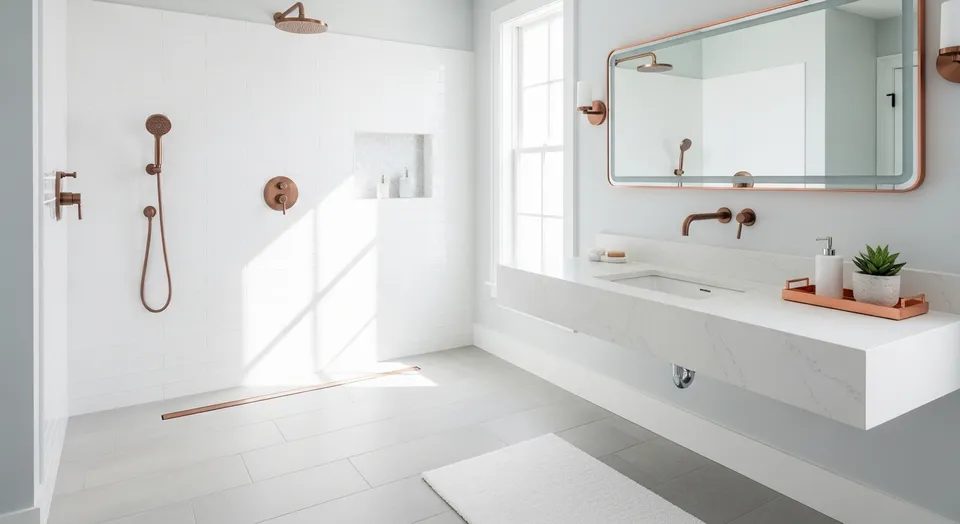
Showers: Walk-in showers with linear drains are the most popular choice in modern Ottawa bathroom renovations. These require careful waterproofing and precise drain placement. Rain shower heads, body sprays, and handheld units each require their own supply lines. We recommend a thermostatic mixing valve for consistent temperature and scald prevention, especially in homes with children.
Bathtubs: Freestanding tubs are a popular luxury feature, but they require floor-mounted drain connections and often a freestanding tub filler that needs supply lines run through the floor. Built-in tubs with surrounds are more straightforward from a plumbing perspective. Whirlpool and air tubs require electrical connections in addition to plumbing.
Sinks and Vanities: Undermount sinks, vessel sinks, and wall-mounted sinks each have different rough-in requirements. Double vanities require additional supply and drain lines. We recommend selecting your vanity and sink before the rough-in phase so drain and supply connections are positioned perfectly. Visit our fixture repair and installation page for more details on fixture services.
Water-Saving Features: Ottawa's water rates continue to rise, making water-efficient fixtures a smart investment. Low-flow faucet aerators, WaterSense toilets, and low-flow shower heads can reduce bathroom water consumption by 30 to 50 percent without compromising performance. We recommend and install water-efficient fixtures on every renovation project.
Bathroom Renovation Plumbing Costs in Ottawa (2026)
Plumbing is a significant component of any bathroom renovation budget. Here is a detailed breakdown of what bathroom renovation plumbing costs in Ottawa for different project scopes. For a complete pricing reference, see our Ottawa plumbing cost guide.
| Project Type | Plumbing Cost Range | What's Included |
|---|---|---|
| Fixture swap (same location) | $1,500 - $3,500 | Remove old fixtures, install new fixtures on existing connections |
| Layout change (moving fixtures) | $3,000 - $8,000 | Reroute supply/drain lines, new rough-in, inspection, fixture install |
| Full bathroom build (from scratch) | $5,000 - $15,000 | Complete rough-in, all new supply/drain/vent, inspection, fixtures |
| Basement bathroom (from rough-in) | $3,000 - $7,000 | Connect to existing rough-in, supply lines, drain, fixture install |
| Basement bathroom (no rough-in) | $6,000 - $15,000 | Break concrete, new drain/supply lines, ejector pump if needed |
| Ensuite addition | $5,000 - $12,000 | New supply/drain/vent from existing stack, full rough-in, fixtures |
| Accessible bathroom conversion | $4,000 - $10,000 | Barrier-free shower, grab bars, comfort-height fixtures, wider access |
Individual Fixture Installation Costs:
| Fixture | Installation Cost (labor only) |
|---|---|
| Toilet installation | $200 - $400 |
| Sink/vanity installation | $250 - $500 |
| Bathtub installation | $500 - $1,500 |
| Shower valve and trim | $400 - $800 |
| Freestanding tub filler | $300 - $600 |
| Heated floor connection | $200 - $400 |
| Bidet/washlet installation | $200 - $500 |
These costs are for plumbing labor only and do not include the cost of the fixtures themselves. We provide a complete written quote that itemizes all labor and materials before starting any work.
Bathroom Renovation Plumbing Timeline: What to Expect
Understanding the plumbing timeline helps you plan your overall renovation schedule and set realistic expectations. Here is a typical timeline for bathroom renovation plumbing in Ottawa:
Phase 1 — Demolition and Assessment (Day 1-2): We remove existing fixtures and open walls and floors as needed to assess existing plumbing conditions. This is when we identify any hidden issues such as corroded pipes, inadequate venting, or outdated materials that need to be addressed. We provide an updated quote if any additional work is needed beyond the original scope.
Phase 2 — Rough-In Plumbing (Day 3-6): This is the most labor-intensive phase. We install all new supply lines, drain lines, and vent lines according to the approved layout. For basement bathrooms, this may include breaking and restoring the concrete floor. All work is done to code and ready for inspection. This phase typically takes 2 to 4 days depending on complexity.
Phase 3 — Inspection (Day 7-10): We schedule the City of Ottawa plumbing inspection once the rough-in is complete. The inspector verifies that all work meets the Ontario Building Code. We coordinate the inspection timing to minimize delays in your renovation schedule. Once passed, the general contractor can proceed with closing walls and installing tile.
Phase 4 — Final Fixture Installation (After tile/finishing): Once tile, countertops, and vanities are installed by your general contractor, we return to install all final fixtures including toilets, faucets, shower trim, and accessories. This phase typically takes 1 to 2 days. We test every fixture, check for leaks, and ensure everything functions perfectly before signing off.
Total Plumbing Time: For a typical bathroom renovation with a layout change, expect approximately 5 to 8 days of plumbing work spread across the renovation timeline. Simple fixture swaps can be completed in a single day. We work closely with your general contractor to coordinate scheduling and keep the project moving efficiently.
Permits and Building Code Requirements in Ottawa
The City of Ottawa requires plumbing permits for most bathroom renovation work. Understanding the permit requirements helps you budget appropriately and avoid delays. Here is what you need to know about plumbing permits for bathroom renovations in Ottawa:
When a Permit Is Required: A plumbing permit is required when you are moving existing fixtures to new locations, adding new fixtures, installing new supply or drain lines, connecting a new bathroom to the existing plumbing system, or installing a sewage ejector pump. Replacing a faucet or toilet on existing connections does not require a permit.
Permit Costs: Plumbing permit fees in Ottawa typically range from $100 to $300 depending on the scope of work. At Ottawa Plumbers, we include the permit fee in our quoted price. We handle the entire permit application process so you do not have to visit city hall or navigate the online permit system.
Inspection Process: After the rough-in plumbing is installed but before walls are closed, a City of Ottawa building inspector must inspect the work. The inspector checks for proper pipe sizing, drainage slope, venting, connections, and overall code compliance. A second inspection may be required after final fixture installation. We schedule all inspections and ensure our work passes on the first visit.
Key Code Requirements: The Ontario Building Code specifies minimum requirements for fixture clearances (the space around each fixture), vent pipe sizing and placement, drainage slope, hot water temperature limits, backflow prevention, and accessibility standards. Our plumbers are thoroughly trained on all current code requirements and stay current with any changes.
Consequences of Skipping Permits: Doing renovation plumbing without a permit may seem like a way to save money, but it creates serious risks. If a problem occurs and the work is not permitted, your insurance may deny the claim. When you sell your home, unpermitted work can delay or derail the sale. The city can require you to open walls and have the work inspected after the fact, which is far more expensive than getting the permit upfront.
Common Bathroom Renovation Plumbing Mistakes to Avoid
After completing hundreds of bathroom renovations in Ottawa, we have seen every mistake in the book. Here are the most common mistakes homeowners make with bathroom renovation plumbing and how to avoid them:
Choosing Fixtures After Rough-In: This is the number one mistake we see. If you select fixtures after the rough-in plumbing is complete, the drain and supply connections may not align with your chosen fixtures. Always select your toilet, vanity, shower system, and bathtub before the rough-in phase so your plumber can position connections precisely.
Ignoring Existing Plumbing Conditions: Many homeowners focus on the cosmetic renovation and ignore the condition of existing pipes behind the walls. If your home has galvanized steel pipes, polybutylene pipes, or clay sewer connections, these should be replaced during the renovation when walls are already open. It is far cheaper to address these issues during a renovation than after everything is finished. Consider plumbing replacements while the walls are open.
Inadequate Waterproofing: Shower and tub areas require proper waterproofing to prevent moisture from penetrating walls and floors. This includes waterproof membranes, properly sealed joints, and correct drainage slope. Cutting corners on waterproofing leads to mold, rot, and structural damage that may not become apparent for months or years.
Undersizing Supply Lines: If you are adding features like a rain shower head, body sprays, and a separate handheld shower, you may need larger supply lines to maintain adequate water pressure. A licensed plumber assesses your home's water pressure and pipe sizing to ensure your new fixtures perform as expected.
Neglecting Shut-Off Valves: Every fixture should have individual shut-off valves that allow you to turn off water to one fixture without affecting the rest of the house. Older homes often lack individual shut-offs. We install individual shut-off valves on every fixture during renovation for convenience and future maintenance.
Hiring Unlicensed Workers: Using unlicensed workers for plumbing may save money upfront, but it creates long-term risks including code violations, failed inspections, insurance complications, and no warranty coverage. Always verify that your plumber is licensed in Ontario.
Repair or Renovate? Making the Right Decision
Not every bathroom plumbing issue requires a full renovation. Sometimes a targeted repair is the most cost-effective solution. Here is how to decide between repairing and renovating your Ottawa bathroom plumbing:
Choose Repair When: The plumbing issue is isolated to a single fixture or connection. Your pipes are in good condition (copper, PEX, or newer ABS). The layout works well for your needs. You are happy with the overall appearance and function of the bathroom. In this case, a focused fixture repair or leak repair is the smart choice.
Choose Renovation When: You have multiple plumbing issues occurring simultaneously. Your home has galvanized steel, polybutylene, or lead pipes that need replacement. You want to change the layout of the bathroom. You are experiencing recurring clogs, leaks, or low water pressure. The bathroom's appearance is dated and you want modern fixtures and finishes. You need to improve accessibility for aging in place.
The 50 Percent Rule: A general guideline is that if the cost of repairs exceeds 50 percent of the cost of a renovation, the renovation is likely the better investment. A renovation addresses all issues at once, uses new materials throughout, and adds value to your home. We provide honest assessments during our free estimates and will recommend repair over renovation when it makes more sense for your situation.
If you are unsure, schedule a free assessment. Our licensed plumbers will inspect your existing plumbing, discuss your goals, and recommend the most cost-effective approach for your specific situation.
Accessible and Aging-in-Place Bathroom Plumbing
More Ottawa homeowners are incorporating accessibility features into their bathroom renovations, whether for current needs or to prepare for aging in place. Accessible bathroom plumbing requires specific knowledge and planning to ensure safety, comfort, and code compliance:
Barrier-Free Showers: Curbless (barrier-free) showers eliminate the step into the shower, making them accessible for wheelchair users and those with mobility challenges. These require careful floor drainage engineering with a linear drain system and precise floor slope. The plumbing rough-in for a barrier-free shower is more complex than a standard shower and requires experienced installation.
Comfort-Height Fixtures: Comfort-height toilets (17 to 19 inches) and raised vanities are easier to use for people with mobility limitations. Wall-hung toilets allow adjustable height installation. We can install these fixtures at custom heights to suit your specific needs.
Anti-Scald Protection: Thermostatic mixing valves and pressure-balanced shower valves prevent sudden temperature changes that can cause scalding. These are especially important for children, elderly residents, and anyone with reduced sensation. Ontario Building Code requires anti-scald protection on all new shower installations.
Grab Bar Blocking: While grab bars themselves are not a plumbing item, we coordinate with your contractor to ensure wood blocking is installed inside walls during the rough-in phase. This allows grab bars to be mounted securely at any time without opening the walls. Planning for grab bars during renovation costs almost nothing but saves significant expense if they are needed later.
Handheld Shower Heads: A handheld shower on a slide bar is essential for accessible bathrooms. We install the supply connection and slide bar mount during the renovation, positioned for comfortable use from both standing and seated positions.
Our Bathroom Renovation Plumbing Process
When you choose Ottawa Plumbers for your bathroom renovation plumbing, here is exactly what you can expect at each stage of the process:
1. Free Consultation and Estimate
We visit your home, assess the existing plumbing, review your renovation plans and fixture selections, and provide a detailed written quote. We discuss any potential challenges and recommend solutions. There is no obligation and no pressure.
2. Planning and Coordination
We coordinate with your general contractor on scheduling, review architectural drawings if available, confirm fixture specifications and rough-in dimensions, and plan the plumbing layout for optimal performance and code compliance.
3. Demolition and Preparation
We disconnect and remove existing fixtures, cap water and drain lines to maintain service to the rest of the home, and assess the condition of existing pipes. We provide an updated scope if any hidden issues are discovered.
4. Rough-In Installation
We install all new supply lines, drain lines, and vent pipes according to the approved layout. All work is done to Ontario Building Code standards using professional-grade materials. We pressure-test all supply lines and flood-test all drains before calling for inspection.
5. Inspection
We schedule and attend the City of Ottawa rough-in inspection. Our work passes inspection on the first visit in virtually every case. Once approved, your contractor can proceed with closing walls and installing tile.
6. Final Fixture Installation
After tile, countertops, and vanities are installed, we return to install all final fixtures including toilets, faucets, shower trim, and accessories. We test every connection, check for leaks, and verify proper operation of all fixtures.
7. Final Walkthrough
We walk through the completed bathroom with you, demonstrate all fixtures and shut-off valves, answer any questions, and ensure you are completely satisfied with the work. We clean up completely and leave the space ready for use.
Frequently Asked Questions
Get a Free Bathroom Renovation Plumbing Quote
Planning a bathroom renovation in Ottawa? Fill out the form below for a free, no-obligation plumbing estimate. We will assess your project and provide a detailed written quote.
Form not loading? Open it in a new tab or call us directly.
Secure form powered by Jobber. We respond within 30 minutes during business hours.