Key Takeaways
- Test and clean your sump pump before Ottawa's spring snowmelt, then repeat the check before major summer storms.
- A clear discharge line, free-moving float, working check valve, and reliable power matter as much as pump horsepower.
- A battery backup sump pump and high-water alarm provide valuable protection during outages and pump failure.
- Never ignore constant cycling, unusual noise, rising water, or a pump that runs without lowering the pit level.
- Keep water away from the foundation with grading, downspout extensions, eavestrough maintenance, and professional advice.
Why Ottawa Basements Flood
Ottawa basements face a seasonal combination that puts sump systems to work: frozen ground, spring snowmelt, quick thaws, and intense rain. As snow and ice release water into the soil around a foundation, the drainage tile carries groundwater towards the sump pit. The pump is then responsible for moving that water safely away from the house. If it cannot start, cannot discharge, or cannot keep up, the lowest floor is usually where water appears first.
Basement flooding prevention in Ottawa is therefore more than buying the biggest pump available. It is a system: sound foundation drainage, functioning grading and eavestroughs, a correctly sized primary pump, dependable electricity, and a tested backup plan. Older homes may have aging weeping tile, a small pit, clay or cast-iron plumbing, or modifications made over decades. Newer construction can still flood when a discharge freezes or heavy rain exceeds the system's capacity.
This guide explains practical Ottawa sump pump maintenance, warning signs that call for sump pump repair in Ottawa, and steps you can take before the next weather event. If water is rising now, put safety first and use our Ottawa emergency plumbing service rather than waiting for the pit to overflow.
The Ottawa Flooding Risk Factors
Snowmelt and saturated ground
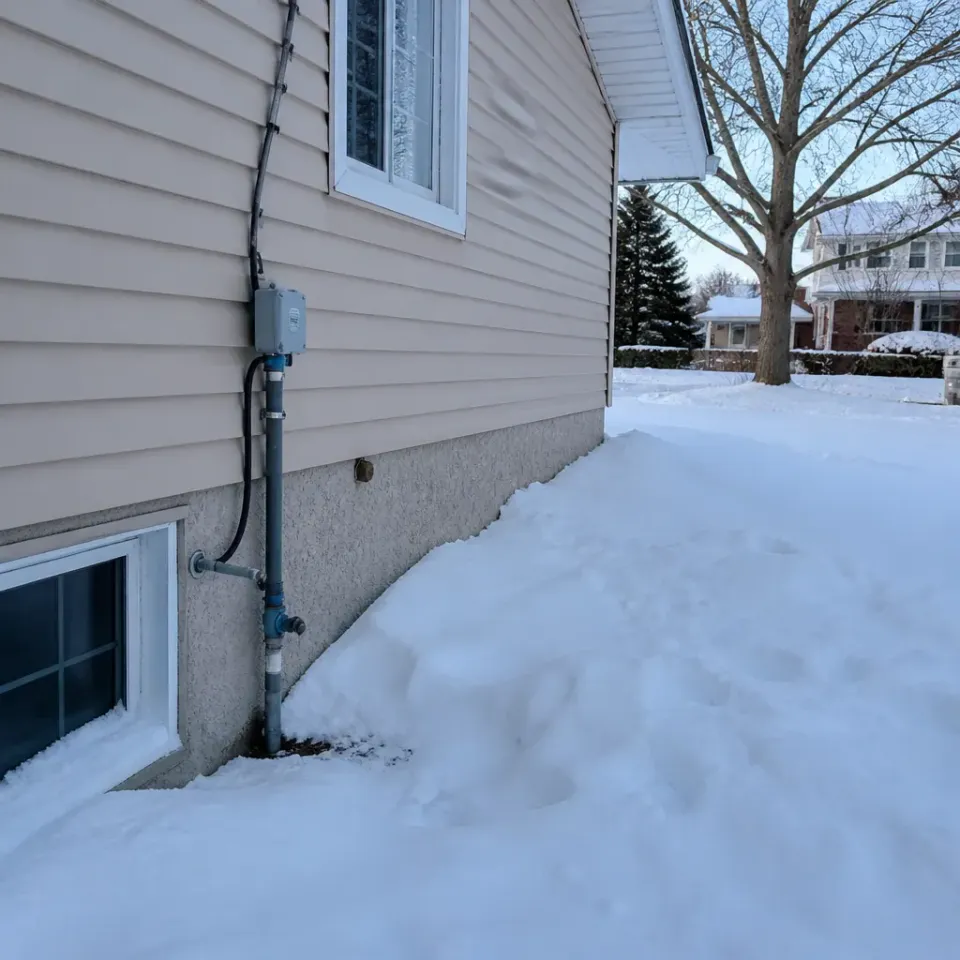
A rapid warm-up can send meltwater into soil that is already frozen or saturated. Water may reach the foundation from several directions, and the pump can cycle continuously for hours. Spring is not the time to discover that a float is stuck or a discharge elbow has split.
Stormwater and intense rain
Thunderstorms can deliver more water in a short period than ordinary drainage can handle. Keep downspouts extended well away from the foundation, and make sure the ground slopes away rather than directing roof water into the sump pit area. Ottawa's stormwater guidance is useful background for understanding runoff around a property.
Outages and frozen discharge
A pump may be healthy yet useless without power. Winter discharge lines can also freeze where they run above grade, creating back-pressure or sending water back towards the foundation. Homes in Kanata, Barrhaven, Orleans, and Nepean experience the same basic risk, though lot grading, age, and local drainage details differ.
What a Reliable Sump System Needs
Your Pre-Season Sump Pump Inspection
Choose a dry day before the spring thaw or storm season. Keep the area around the pit accessible; storage boxes and finished-wall panels make a small failure harder to see and reach.
Look into the pit
Remove the cover if it is designed to be removed. Check for mud, gravel, rubbish, or a stuck pump. The pump should stand upright and the intake should not be buried in sediment.
Add water slowly
Pour water into the pit until the float rises and the pump starts. Confirm that it shuts off when the level falls, without chattering or cycling every few seconds.
Watch the discharge
Verify that water exits outdoors and does not leak at a fitting or return immediately towards the foundation. Check that the outlet is not blocked by ice, leaves, or snow.
Check power and alarm
Inspect the cord and receptacle without touching wet electrical equipment. Test the high-water alarm and backup controller according to its instructions.
Sump Pump Maintenance Checklist
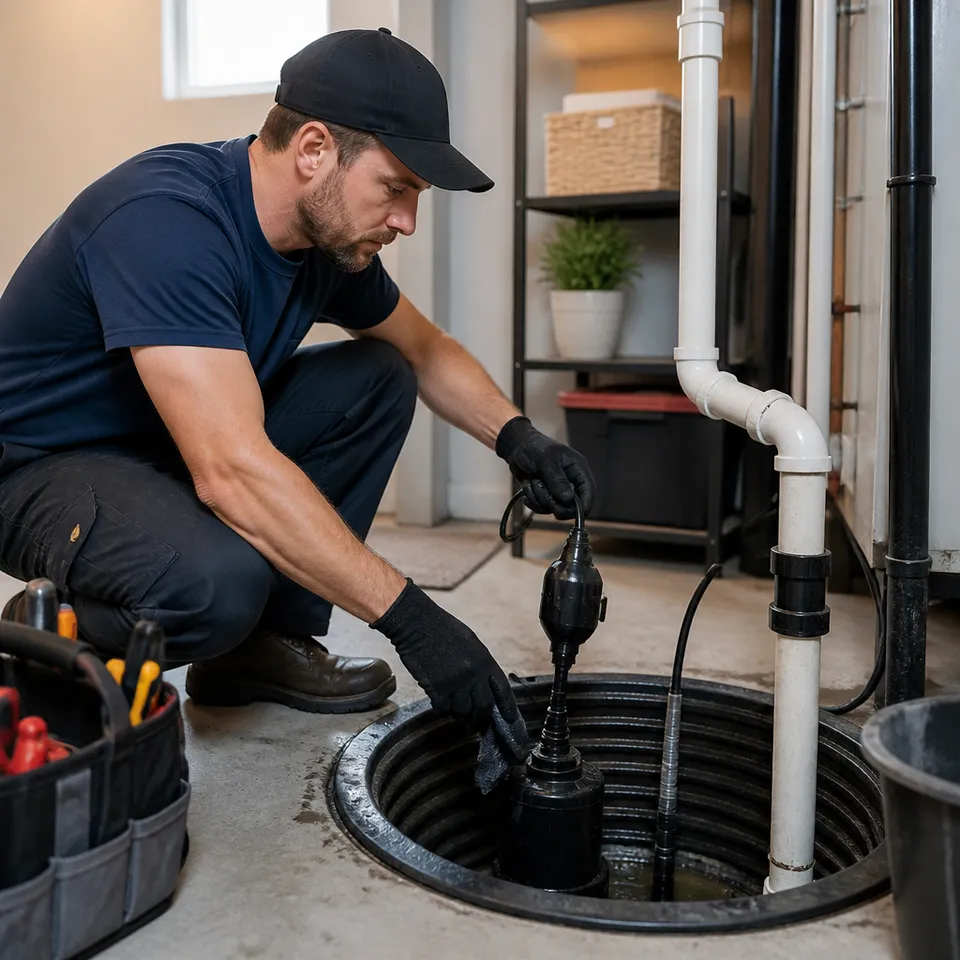
A working pump should not be left in a dirty pit indefinitely. Unplug it safely before cleaning, then follow the manufacturer's instructions. Wipe away deposits, remove debris around the intake screen, and check that the float can travel without touching the pit wall or pipes. Do not oil a sealed pump unless the manufacturer specifically calls for it.
Inspect the discharge and check valve
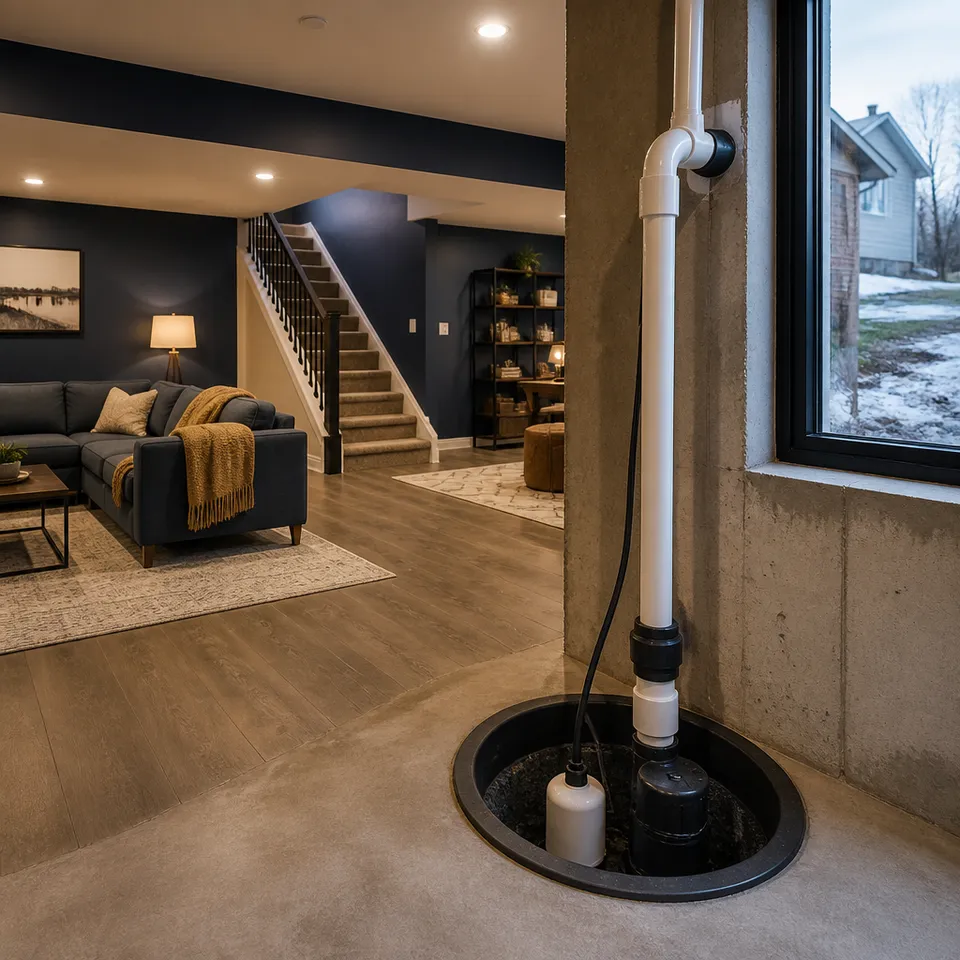
The discharge pipe needs adequate support and a route that drains water away from the foundation. A check valve stops the vertical column of water from falling back into the pit after shutdown; a failed valve can cause short cycling and premature wear. Listen for water hammer or a harsh slam when the pump stops.
Keep the pit cover and room accessible
A sealed or fitted cover helps reduce odour and keeps debris out, but it must not prevent inspection or service. Label the pump breaker, keep a torch nearby, and make sure an alarm can be heard upstairs. Annual plumbing inspection is also a useful time to ask a professional to assess the system, especially in an older home.
Battery Backup and Secondary Protection
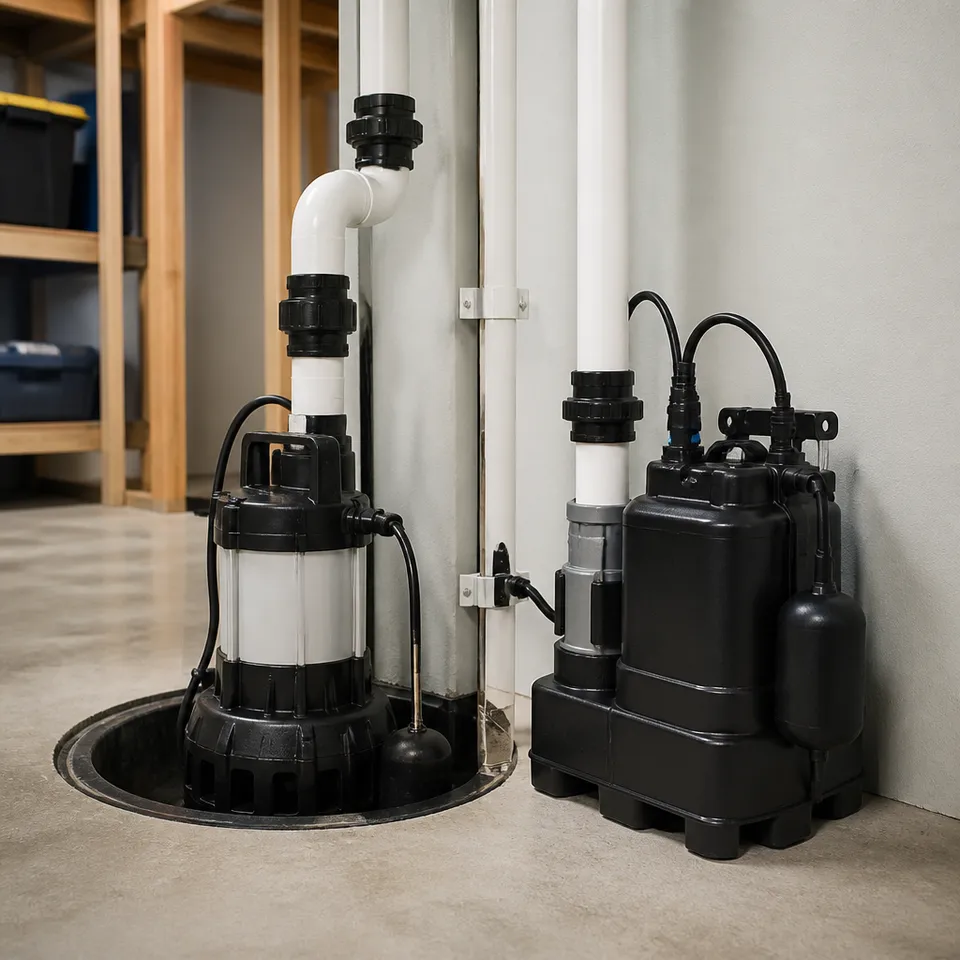
A battery backup sump pump starts when the primary pump is overwhelmed, fails, or loses electricity, depending on the control system. It should have its own pump, check valve, discharge arrangement, and alarm. A battery that has sat discharged for years is not a backup, so test the controller and follow the replacement schedule.
Battery chemistry, pit inflow, pump capacity, and discharge lift all affect runtime. Ask about a sealed maintenance-free battery or another option appropriate for the location, and consider an alarm that reports a high-water condition. A generator or suitable home backup power system may add another layer, but it must be installed and operated safely.
| Protection | Strength | Limitation |
|---|---|---|
| Primary electric pump | Handles normal groundwater efficiently | Stops if the motor, switch, outlet, or power fails |
| Battery backup pump | Continues pumping during many outages and primary failures | Runtime depends on battery health and water inflow |
| Generator or home backup power | Can support pumps and other essential circuits | Requires safe installation, fuel or battery capacity, and maintenance |
| High-water alarm | Warns before water reaches finished flooring | Alerts you; it does not remove water on its own |
Preparing for Spring Snowmelt and Heavy Rain
Before the thaw, clear snow from around the foundation where practical and open the path for the discharge outlet. Clean eavestroughs after winter, reconnect downspout extensions, and check that meltwater is not pooling beside the house. Never bury an outlet under snow or allow it to discharge onto a walkway where it can freeze into a hazard.
When a storm is forecast, verify that the primary and battery systems are powered and that the alarm is audible. Do not unplug the pump to protect it from cycling; frequent cycling is a diagnostic clue, not a reason to disable the only protection. If the pit level rises unusually quickly, call before the water reaches electrical equipment or finished walls.
Troubleshooting a Pump That Will Not Run
The pit is full and the pump is silent
From a dry location, check whether the breaker or GFCI has tripped and whether the float is stuck. Do not repeatedly reset a breaker, use an extension cord, or handle a wet plug. If power is present but the motor does not respond, the switch, motor, impeller, or wiring may have failed.
The pump hums, runs, but moves little water
A blocked intake, jammed impeller, frozen discharge, failed check valve, or damaged pipe can cause this symptom. Unplug safely before any inspection. If the water level continues to rise, use the backup system only as designed and call for urgent service.
The pump cycles too often
Short cycling wastes energy and wears the motor. Common causes include a small pit, a float set too close to the shut-off level, backflow through the check valve, or water returning from a poor discharge route. The solution is often an installation correction rather than a new motor alone.
Repair or Replace Your Sump Pump?
A float switch, check valve, blocked intake, loose discharge joint, or failed alarm can often be repaired without replacing the whole system. Replacement makes more sense when the motor is worn, the pump is unreliable under load, the model is obsolete, or repair cost approaches a new properly sized installation. If your pump has been running hard through several Ottawa seasons, plan replacement before an emergency.
Ask for the cause of failure, not just a horsepower recommendation. A new pump connected to a frozen, restricted, or poorly routed discharge can fail in the same way. Reputable sump pump specialists in Ottawa will assess the pit, inflow, piping, power, and backup requirements as a system.
For installation, replacement, and planned maintenance, see our Ottawa sump pump service page to understand the assessment and service options.
A Whole-Basement Flood Prevention Plan
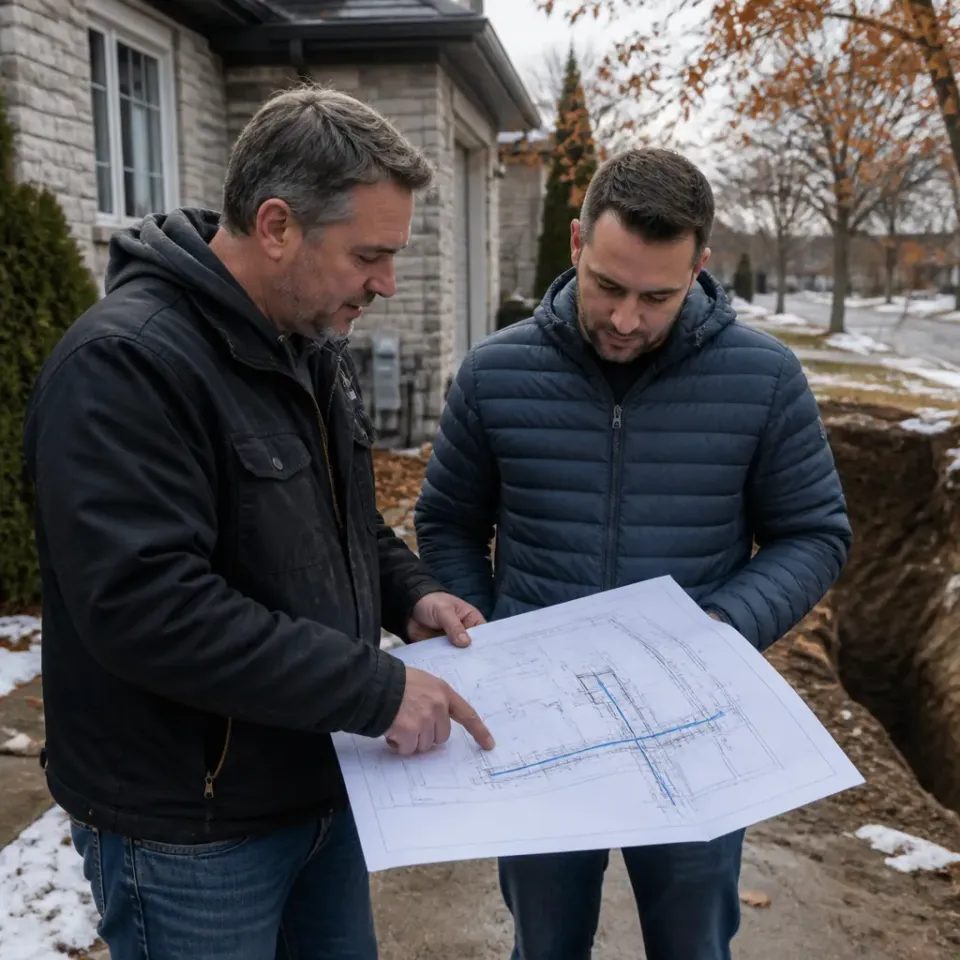
Sump pump maintenance is essential, but water management begins outside. Walk the property after rain and look for ponding, overflowing eavestroughs, downspouts that end beside the wall, and grading that slopes towards the house. Keep window wells clear and consider covers where appropriate. Seal obvious foundation penetrations only after identifying whether they are active drainage points.
- Keep the pit accessible and install a high-water alarm where it can be heard.
- Use a correctly sized discharge pipe with secure fittings and a functioning check valve.
- Test the battery backup before every spring thaw and after prolonged power interruptions.
- Store important items off the floor and use water-resistant materials in vulnerable areas.
- Know the location of the electrical panel and water shutoff, and share the plan with family members.
If you see dampness, efflorescence, a musty smell, or repeated seepage, investigate early. A hidden water leak assessment or foundation drainage review may prevent a minor concern from becoming a finished-basement restoration project.
Approximate Ottawa Sump Pump Costs
| Work | Approximate range | What changes the price |
|---|---|---|
| Inspection and testing | $150–$300 | Access, alarm and backup checks, discharge issues |
| Float, valve, or minor repair | $150–$500 | Part, accessibility, water conditions, labour |
| Primary pump replacement | $500–$1,500+ | Pump capacity, pit, piping, check valve, installation |
| Battery backup installation | $700–$2,000+ | Battery type, second discharge, alarm, electrical work |
| Drainage or water-management work | Assessment required | Excavation, foundation condition, and scope |
Costs can be lower when a faulty switch is caught during routine maintenance and much higher after water damages flooring, drywall, furniture, or electrical systems. For context on other household plumbing work, see our Ottawa plumbing cost guide.
When to Call a Professional
Call promptly if the pit is filling faster than the pump can lower it, the pump repeatedly trips power, the discharge freezes or leaks, the motor smells hot, or an alarm activates. Professional sump pump repair in Ottawa is also appropriate when the pit is inaccessible, the home has recurring flooding, or you want an independent backup system.
A plumber can measure head height and flow, inspect the check valve and discharge, test electrical controls, and identify whether groundwater is entering through a drainage problem. For related seasonal concerns, our frozen pipe repair guide explains why below-freezing conditions need careful handling.
Insurance, Documentation, and Recovery
Photograph the pump, pit, battery, discharge, and finished rooms before a problem occurs. Keep receipts, service notes, model numbers, and records of tests. These documents can help establish what equipment was installed and when, although they do not guarantee coverage.
Water coverage varies considerably. Ask your insurer or broker whether sewer backup, sump overflow, groundwater, and overland water are treated differently under your policy. If flooding happens, protect people first, avoid unsafe electrical contact, document damage, and notify the insurer. Do not discard damaged materials until you receive instructions, unless necessary to prevent an immediate hazard.