Key Takeaways
- The timing of the leak is a useful clue: moisture during drainage often comes from drain fittings, while a steady drip may involve a pressurized connection.
- Dry the cabinet, use a towel to trace the first wet point, and photograph the area before moving stored items or taking anything apart.
- A sink that drains slowly is not automatically a plumbing leak; keep clog-clearing separate from repairs to the basin, strainer, trap, or supply line.
- Stop using a leaking fixture until you understand the source, especially if water is near electrical equipment or may be reaching another unit.
- Share the building type, leak timing, affected fixtures, and any shutoff information with the plumber to help plan the right assessment.
Sink Repair in Ottawa Starts With Finding the Leak
Searching for sink repair in Ottawa usually means something has changed: the cabinet floor is damp, a connection drips after washing dishes, the basin holds water, or an old sink has started to move. Before replacing a fixture or pouring a product into the drain, identify when the water appears and where it first becomes visible. That simple observation can separate a supply-side leak from a drain fitting, a basin crack, or a blockage.
A kitchen or bathroom sink is a small system made up of several parts: the faucet and its connections, the basin, the drain opening and seal, an overflow passage on some models, and the pipework underneath. A problem at any one point can leave the same puddle on the cabinet floor. The visible water is not always directly below the failed joint; it can travel along a pipe, shelf, cabinet wall, or countertop before dripping.
This guide helps Ottawa homeowners narrow down the likely source, take safe first steps, and decide when a repair should be handled by a professional. It focuses on leaks and fixture connections—not how to clear a clog. If the cabinet is dry and the main issue is slow draining, follow our separate guide to unclogging a sink and other household drains.
Where Is the Water Coming From?
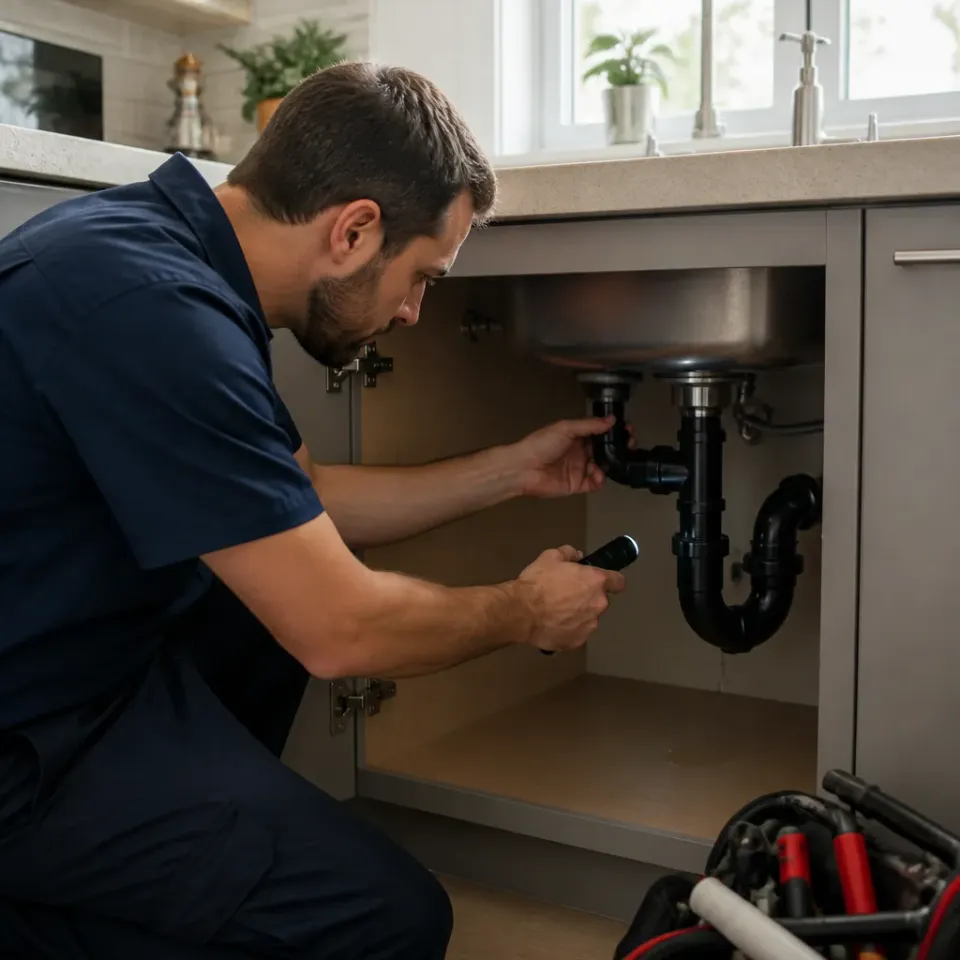
The most helpful question is not simply “Is the sink leaking?” but “What was happening when the first drop appeared?” If it is safe to observe, dry the visible pipework and cabinet surface, then use the sink briefly while watching from outside the cabinet. Do not reach into a crowded space or touch anything electrical. The pattern may help a plumber decide whether to inspect the supply, fixture, basin, or drain first.
Water appears when the tap is on
If water shows up while the faucet is running, look at the faucet base and the underside of the basin, as well as the supply connectors and shutoff valves. A loose or worn connection can leak only when water is moving through the fixture; a leak at a faucet deck may run behind the basin before it reaches the cabinet. Keep faucet-repair symptoms distinct from a sink drain leak: a drip from the spout into the bowl is a faucet issue, while water outside the bowl needs its own trace.
Water appears while the basin drains
When the basin holds water without leaking, then the cabinet gets wet as it empties, the drain assembly deserves a closer look. The strainer or basket at the basin opening, its seal, the tailpiece, overflow channel, and trap connections all carry discharge water. A connection may leak only when a full bowl sends a stronger flow through it, so a quick glance while the tap is off can miss the problem.
Water appears even when the sink is idle
Moisture that returns with the faucet and drain unused may point to a supply connection, shutoff valve, nearby appliance hose, or water arriving from above or behind the cabinet. Check whether the first wet point is on a supply line or on the drain. A closed faucet does not depressurize its supply connections, so do not assume an intermittent drip is harmless just because it stops when you turn off the tap.
The basin or counter is wet
A damaged seal around the sink rim can let splash water move under the counter. A crack in a porcelain, ceramic, stone, or composite basin may appear as a fine line, a chip near the drain, or a wet mark that returns after the surface dries. Water around the rim may also come from normal splashing or a clogged overflow channel; inspect the pattern before applying caulk, because covering the visible edge does not repair a failed drain seal or a crack.
Safe Checks Before You Call
A few careful checks can make the call more useful without turning a small leak into a larger repair. Move cleaning products and stored items out of the way only if they can be lifted safely, and take a photo of the cabinet before wiping it dry. Then work through these steps:
- Stop using the sink. If water is escaping, continuing to run the tap makes the leak harder to trace and can wet more material.
- Dry the visible area. Use a towel, then place a dry tissue or paper towel beneath separate joints to locate the first point that gets wet.
- Look, do not dismantle. Note whether moisture is at a braided supply connector, valve stem, basin rim, drain flange, trap nut, or cabinet wall.
- Check other fixtures. If more than one sink or drain is affected, tell the plumber; it may be a shared branch or building issue rather than one fixture.
- Use a shutoff only if it is safe. Turn a local valve gently if you know what it serves. Do not force a corroded or stuck valve; a broken valve can make the leak worse.
- Protect the cabinet. Keep a shallow tray or towel below the drip, and move belongings away from the wet area without touching outlets or power bars.
Avoid tightening every nut you can reach. Drain fittings may be plastic, and excessive force can crack a fitting, distort a washer, or make a joint harder to service. Do not apply sealant around the outside of a connection that is leaking from inside; it may hide the source temporarily while water continues to escape behind the cabinet.
Common Sink Drain Assembly Problems
Under the basin, the drain is assembled from several joints. The basket strainer or pop-up body passes through the sink opening; a tailpiece runs down from it, and a curved trap holds a small amount of water that helps block sewer odours from entering the room. Bathroom sinks may also have a lift rod and overflow channel. Each joint needs to align and seal correctly, and the correct repair depends on the fitting and material.
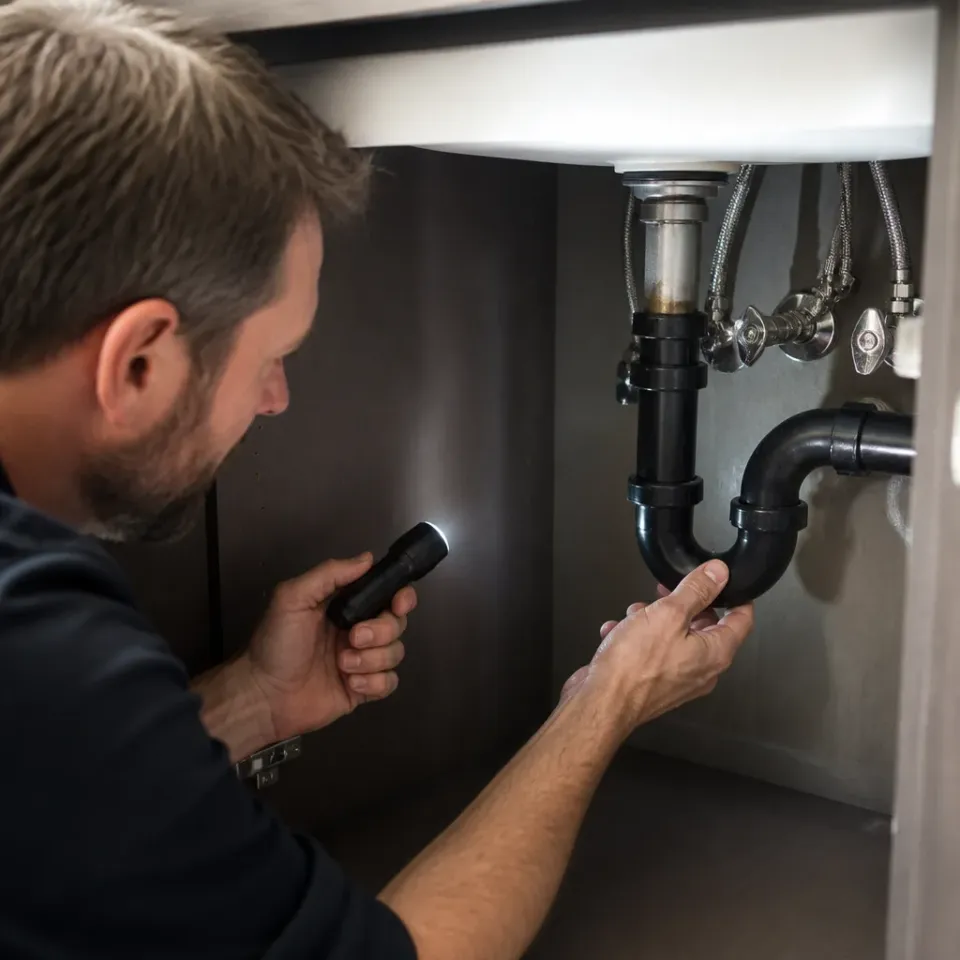
These are common patterns a plumber may investigate:
- A drip at the strainer: the seal between the drain body and sink opening may have loosened, aged, or been installed unevenly.
- A wet tailpiece or trap joint: a nut, washer, alignment, or pipe section may be the issue. A replacement part must match the pipe size and connection style.
- Water at a bathroom overflow: the overflow gasket or channel can leak when the basin is filled high enough to reach it.
- Odour or recurring dampness: the trap, venting, or a hidden connection may need assessment; masking the smell does not correct a plumbing fault.
A slow sink that stays dry is more likely a drainage-flow problem than a leak repair. Avoid pouring chemical products into a sink when a plumber may need to open the trap, and do not mix cleaners. Our separate Ottawa drain-cleaning service page explains the professional option for stubborn blockages; this article is about water escaping around the fixture or its connections.
Repair the Part or Replace the Sink?
A leak does not automatically mean the whole sink needs replacing. Often the failed piece is a seal, strainer, tailpiece, trap, supply connector, or shutoff valve. A professional can identify whether the surrounding material is sound, whether the repair part is available, and whether the joint can be reached without removing a countertop or cabinet panel.
When a component repair may be enough
If the basin is stable and uncracked, the counter is dry, and the leak comes from one accessible connection, repairing that component may solve the issue without disturbing the fixture. Ask the plumber to show you the failed part and explain whether the work includes new washers or seals, reconnection, and a leak test after the sink is run. A repair should leave the trap aligned and the cabinet dry, not just stop the visible drop for the moment.
When replacement deserves consideration
A cracked basin, a badly corroded drain opening, repeated failure around a distorted rim, or a fixture that no longer sits securely may make replacement more practical. For an undermount sink, the support and bond beneath the countertop matter as much as the drain connection. If the sink has shifted or dropped, do not rely on caulk alone to hold it in place; have the support and surrounding counter assessed.
Replacing a sink can involve dimensions, faucet-hole spacing, counter material, drain location, supply connections, and the disposal or dishwasher arrangement in a kitchen. Confirm the new fixture will fit the opening and connect to the existing layout before ordering it. If the drain or water lines need to move, the work is broader than swapping the basin; have the installer explain the scope and confirm whether any permit or inspection applies.
Cosmetic staining alone is not proof that a basin has failed. Dry the area, watch for recurring moisture, and check below the cabinet. If water has spread into the wall or floor, our Ottawa guide to tracking hidden plumbing leaks can help you recognize signs that need a broader assessment.
Ottawa Homes, Condos and Rental Repairs
The same sink symptom can require a different plan depending on the building. In a detached house, the fixture shutoffs may be accessible in the cabinet. In a condominium, a valve may serve more than one fixture or require building staff to isolate a riser. In a rental, the tenant should report the leak promptly and follow the landlord or property manager's process rather than modifying plumbing without approval.
Ontario's maintenance standards for rental housing include requirements for plumbing fixtures to be maintained in good repair and safely operable. That makes prompt reporting and clear records useful for both tenants and property managers. Take a photo, note when the leak appears, and keep copies of any repair instructions or service reports. For questions about a specific tenancy, use the official rule and seek appropriate housing guidance rather than assuming a general plumbing article settles responsibility.
Ottawa homes also vary in age and layout. A sink replacement in an established home may reveal older valves or pipe connections that should not be forced, while a newer kitchen may have a disposal, filtered-water tap, or dishwasher connection sharing the cabinet space. Let the plumber know what is installed so the work can be planned around the actual connections.
If the repair expands into moving plumbing or changing a kitchen or bathroom layout, check the scope with a qualified contractor and use the City of Ottawa building-permit guidance as a starting point. A routine fixture repair and a renovation that changes the plumbing layout should not be treated as the same project.
What to Tell a Sink Repair Plumber
A clear description can help the plumber bring suitable parts and decide what to inspect first. Before booking, jot down:
- Whether the sink is in a kitchen, bathroom, laundry area, or shared space.
- When the water appears: while the faucet runs, while the basin drains, after the sink has been idle, or only when the basin is full.
- The first wet spot you can see and whether other fixtures or rooms are affected.
- Any recent work, new faucet or sink installation, disposal use, or change in drainage.
- Whether you rent, live in a condo, or need a building manager to authorize access or a water shutoff.
- Photos of the cabinet, valves, drain fittings, and any visible damage before the area is moved or cleaned.
Ask what the assessment includes and whether the quoted work covers the suspected leak source, replacement parts, reconnection, cleanup, and a test under running water. If the source is not visible, ask how additional investigation will be approved before the scope changes. Keep the final invoice and note which valve or component was repaired; that record is useful if the same area becomes wet again.
If you need professional help, review Plumbing Now's sink repair in Ottawa through its plumbing-repair service and confirm that the proposed visit covers the specific basin, drain fitting, or supply connection involved. You can also compare the site's local Ottawa fixture-repair information with the problem you observed.
When a Sink Leak Needs Urgent Attention
A single drop into a tray is different from water spreading into a wall, damaging a ceiling below, or reaching electrical equipment. Stop using the sink and arrange prompt help if the shutoff will not close, a supply line is spraying, the cabinet is filling, or water is appearing in another unit. If the leak is small but continues after the sink is idle, do not leave it unattended overnight without isolating the source safely.
When a sink is connected to a shared drain, several affected fixtures or sewage odour can point to a larger drainage problem rather than a local basin repair. Avoid running more water into a line that may already be backing up. If the immediate concern is a building-wide backup or flooding, use the appropriate Ottawa emergency plumbing service instead of waiting for a routine sink appointment.
After the repair, run the faucet and drain only as directed, check the cabinet again, and confirm the area stays dry. Put stored items back only after the base and surrounding material have dried. If staining, swelling, a musty smell, or moisture returns, tell the plumber or property manager; the visible connection may not have been the only affected area.