Key Takeaways
- Submersible well pumps last 8–15 years; above-ground jet pumps last 6–10 years.
- Low or fluctuating water pressure and air sputtering from taps are the earliest warning signs.
- Short cycling is usually a waterlogged pressure tank or failing pressure switch — fix it fast to protect the pump.
- Well pump replacement runs $1,200–$3,500; many issues are cheaper component repairs.
- Correct sizing, a healthy pressure tank, and water treatment dramatically extend pump life.
How Long Do Well Pumps Last?
If your home draws water from a private well, the well pump is the single most important piece of plumbing equipment you own — and like any mechanical system, it doesn't last forever. The most common question we hear from rural and semi-rural homeowners around Ottawa is simple: how long do well pumps last?
The short answer: a quality submersible well pump lasts 8–15 years, while an above-ground jet pump lasts 6–10 years. Where your pump lands in that range depends on water quality, how hard it works, and how well it was installed and maintained.
This guide explains the difference between pump types, the warning signs of failure, what repairs and replacements cost, and how to squeeze the most years out of your system. Because a well pump failure means no running water at all, knowing the signs early is well worth your time. Our trusted partner Plumbing Now specializes in well pump service across the Ottawa region.
Well Pump Lifespan at a Glance
Submersible vs Jet Pumps: Know Your System
There are two main types of residential well pumps, and which one you have affects both lifespan and repair cost.
| Feature | Submersible Pump | Jet Pump |
|---|---|---|
| Location | Inside the well, below water | Above ground (basement/well house) |
| Best for | Deep wells (25 ft+) | Shallow & deep wells |
| Typical lifespan | 8–15 years | 6–10 years |
| Efficiency | Higher (pushes water up) | Lower (suction) |
| Noise | Very quiet | Audible when running |
| Repair access | Must be pulled from well | Easy, above ground |
A deep well jet pump uses a two-pipe system to draw water from greater depths, while a shallow-well jet pump works to about 25 feet. Submersible pumps are the most common choice for deeper modern wells because they're efficient and long-lived.
What Affects Well Pump Lifespan
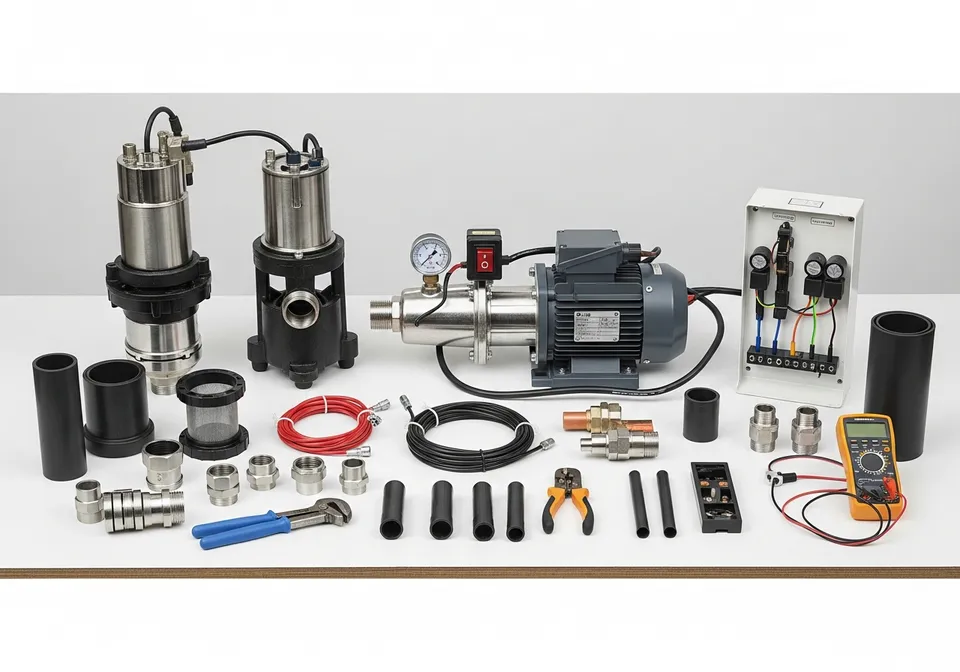
- Water quality — sand, sediment, and hard water wear pump components faster. Sediment is one of the leading causes of premature failure.
- Cycling frequency — a pump that turns on and off too often (short cycling) wears out years early.
- Correct sizing — an undersized pump runs constantly; an oversized one short cycles. Proper sizing is critical.
- Pressure tank health — a failing pressure tank forces the pump to work harder and cycle more.
- Installation quality — correct wiring, depth, and components from the start make a major difference.
- Electrical issues — voltage fluctuations and lightning strikes can damage pump motors.
8 Signs Your Well Pump Is Failing
- Low or dropping water pressure — the most common early sign of a struggling pump.
- Sputtering or air from faucets — air in the lines can mean the water level has dropped or the pump is failing.
- Pump runs constantly — it can't build or hold pressure.
- Rapid on/off short cycling — usually a pressure tank or switch problem that's wearing the pump.
- Dirty, sandy, or cloudy water — sediment intrusion or a pump pulling from too low.
- Spiking electricity bills — a failing motor draws more power.
- Strange noises — clicking, rumbling, or rapid clicking from the pressure tank or switch.
- No water at all — total failure, which calls for immediate service.
Repair or Replace Your Well Pump?
Not every well water problem means a new pump. Many issues come from supporting components that are cheaper to fix:
- Pressure switch — controls when the pump turns on and off. A common, low-cost failure.
- Pressure tank — a waterlogged tank causes short cycling and is often the real culprit.
- Capacitor or control box — affordable parts that can stop a pump from starting.
- Wiring or check valve — repairable issues that mimic pump failure.
As a guideline: repair if the pump is under 7–8 years old and the fault is a component; replace if the pump itself has failed, is past its expected lifespan, or has failed repeatedly. A professional diagnosis avoids paying for a full replacement when a $200 part would do.
Well Pump Repair & Replacement Costs
| Service | Typical Cost (2026) |
|---|---|
| Pressure switch replacement | $150 – $350 |
| Pressure tank replacement | $400 – $900 |
| Capacitor / control box | $150 – $450 |
| Jet pump replacement | $1,000 – $2,200 |
| Submersible pump replacement | $1,500 – $3,500 |
| Full system diagnosis | Often free with repair |
The Pressure Tank's Hidden Role
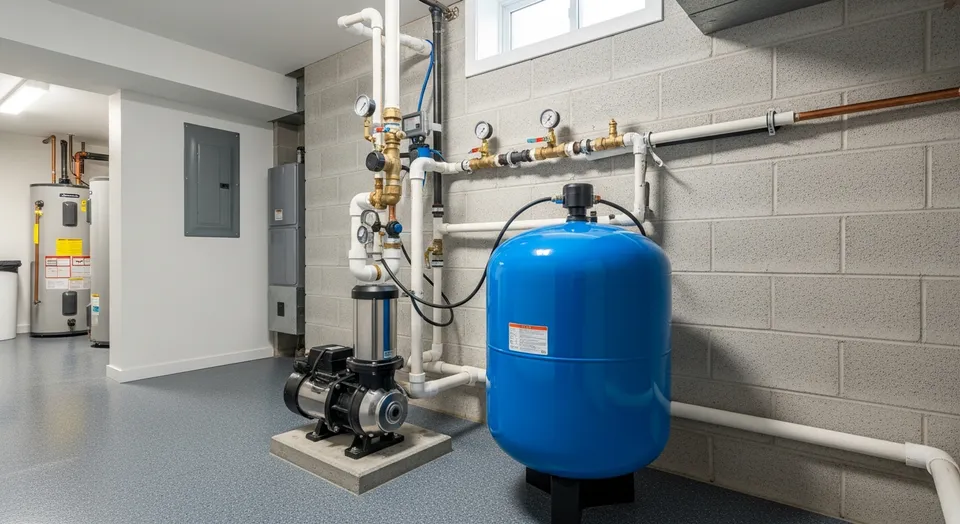
Most homeowners focus entirely on the pump, but the pressure tank is the unsung hero of a well system — and the most common reason a perfectly good pump fails years early. Understanding how it works explains a huge share of well problems.
A pressure tank holds a reserve of pressurized water using a cushion of compressed air, usually separated from the water by a rubber bladder. When you open a tap, the tank delivers water first — so the pump doesn't have to start for every small draw. This buffer is what lets the pump turn on, run for a reasonable stretch, and shut off, rather than firing up dozens of times a day.
When the bladder fails or the air charge leaks out, the tank becomes "waterlogged" — it can no longer hold a proper air cushion. Now the pump kicks on the moment you crack a tap and shuts off seconds later: classic short cycling. Each start-stop cycle is the hardest moment in a pump motor's life, so a waterlogged tank can wear out a pump in a fraction of its expected lifespan.
The good news: a pressure tank is far cheaper to replace than a pump, and checking its air pre-charge is a simple annual task. If you notice the pump cycling rapidly, have the tank checked before assuming the pump itself is to blame — it often saves a costly, unnecessary pump replacement.
How to Extend Your Well Pump's Life
- Treat sediment and hard water — a sediment filter or water softener reduces wear. See related water system services.
- Keep the pressure tank healthy — check the air charge annually to prevent short cycling.
- Schedule periodic inspections — catching small issues early prevents major failures.
- Test your water yearly — recommended by Health Canada for all private wells to monitor quality and safety.
- Don't ignore early symptoms — low pressure and cycling changes are cheap to fix early.
A Simple Well Pump Maintenance Schedule
A well system rewards a little routine attention with years of extra service life. You don't need to be a technician — most of this is observation, plus one or two professional checks. Here's a practical schedule for the average Ottawa-area well owner.
Monthly
Pay attention to how the system behaves. Note any change in water pressure, new sputtering at the taps, unusual noises from the pressure tank, or the pump seeming to run more often than it used to. Catching a trend early is the whole game — small symptoms are cheap to fix, total failures are not.
Seasonally
Before deep winter, confirm the pump, pressure tank, and any exposed piping are in a space that stays above freezing. Check for any signs of moisture or corrosion around fittings. In spring, after the thaw, watch for sediment or cloudiness that can follow heavy runoff.
Annually
Have the pressure tank's air pre-charge and the pressure switch checked — this single step prevents the short cycling that destroys pumps. Test your water for bacteria and, periodically, for chemical parameters. If your water has noticeable sediment or hardness, review your filtration with a professional.
Every few years
Book a full professional inspection of the pump, tank, wiring, and well components. A technician can measure performance, spot a pump that's beginning to weaken, and help you plan a replacement on your own schedule — rather than scrambling during a no-water emergency.
Well Ownership Around Ottawa
Tens of thousands of households in the rural communities surrounding Ottawa — places like Greely, Manotick, Carp, Cumberland, North Gower, Osgoode, and the countryside beyond Kanata and Barrhaven — rely on private wells rather than municipal water. If that's you, the well pump and pressure system are entirely your responsibility, and a few regional realities are worth knowing.
If you own a home in Russell Township and are unsure whether a call involves household plumbing, a private well, or a septic system, see our Russell-area plumber service-call guide for a local checklist before booking.
Cold winters and pump equipment
Ottawa winters are hard on above-ground equipment. Jet pumps, pressure tanks, and exposed piping in unheated basements, well houses, or crawl spaces are vulnerable to freezing, which can crack components and cause sudden failure. Keeping the equipment area insulated and above freezing is one of the simplest ways to avoid a mid-winter no-water emergency — the worst possible time to be without water.
Local water chemistry
Groundwater in the Ottawa Valley varies widely by location — some wells draw hard, mineral-rich water, others contend with iron, sulphur, or sediment. All of these accelerate wear on pump components and fixtures. This is why local water treatment is so common here, and why testing matters.
Test your water regularly
Health Canada and provincial health authorities recommend testing private well water at least a few times a year for bacteria, and periodically for chemical parameters. Beyond safety, regular testing flags rising sediment or mineral levels early — a useful warning sign for both your pump and your household plumbing. Ontario offers free bacterial testing for private wells through public health labs.
What to Do If Your Pump Fails
If you suddenly have no water, first check your electrical panel — a tripped breaker is a common and simple cause. If the breaker is fine and there's still no water, avoid repeatedly switching the pump on, which can damage the motor. Call a licensed well pump technician for a proper diagnosis.
A no-water situation is effectively a plumbing emergency — see our plumbing emergency guide for what to do while you wait, and our 24/7 emergency plumbing service for urgent help.