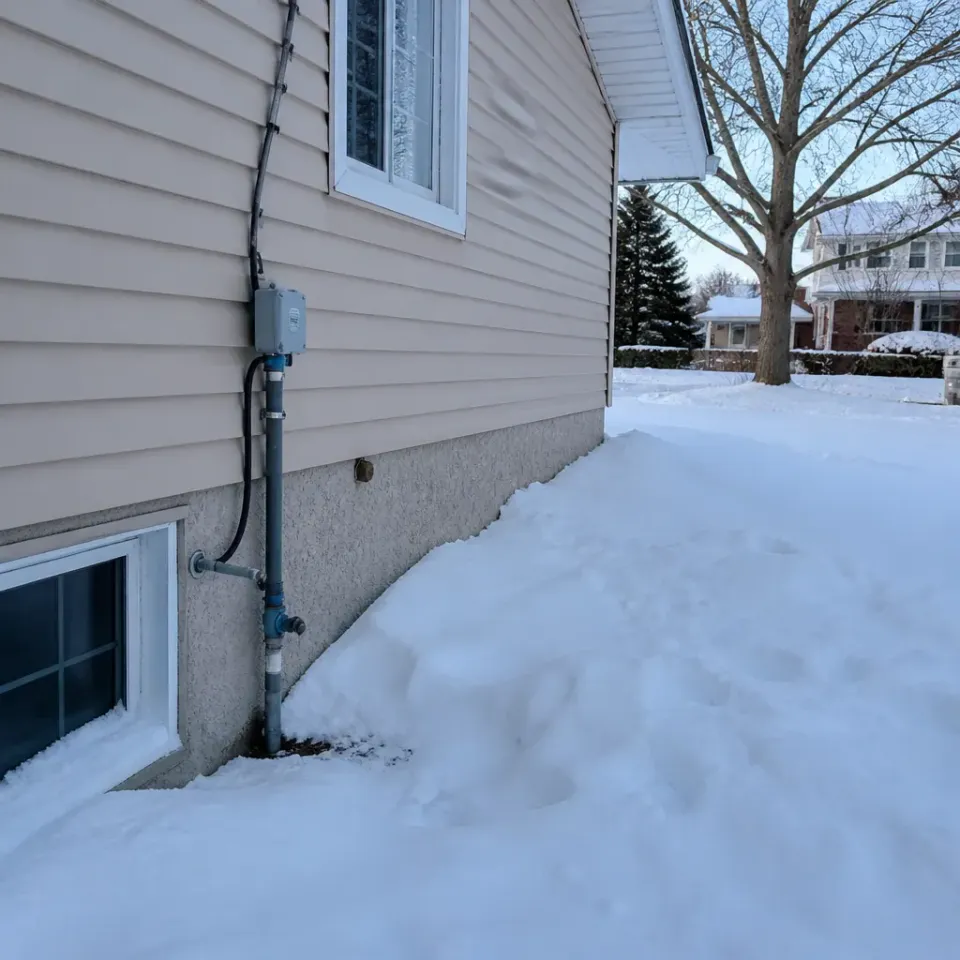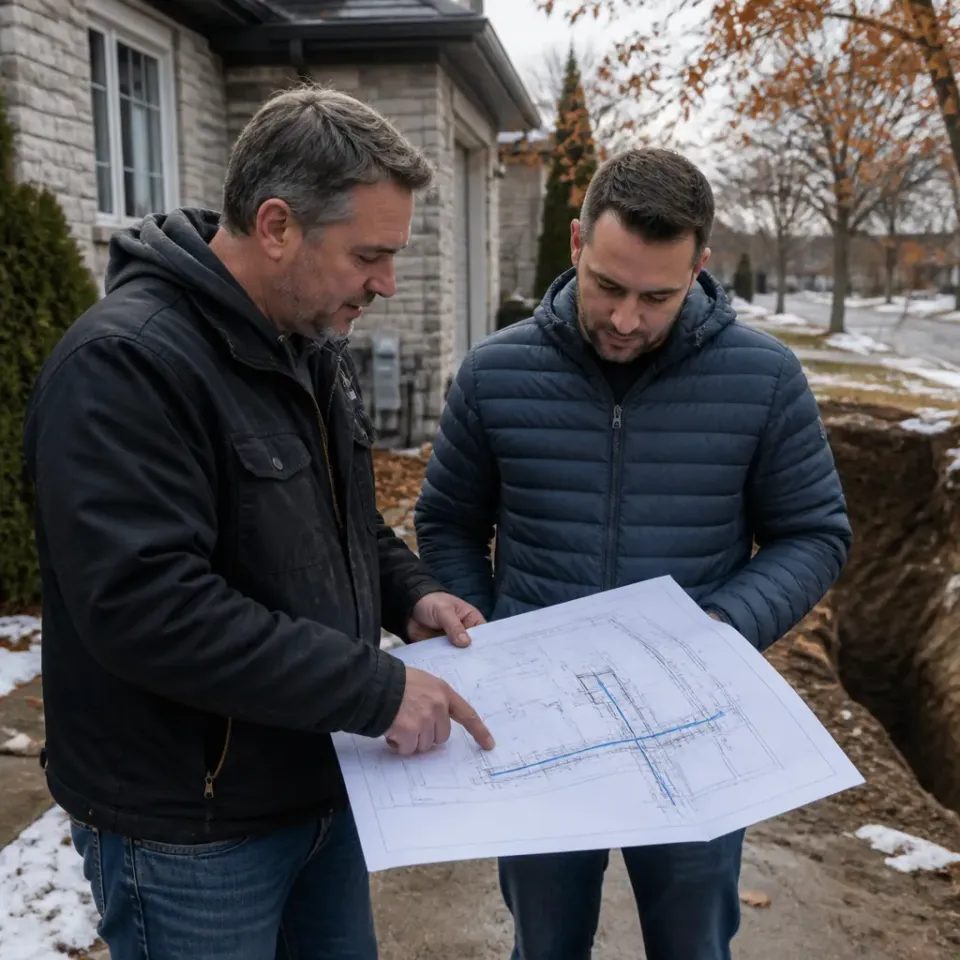
A backwater valve is a one-way device intended to help prevent wastewater from a surcharged or blocked sewer from flowing backward into the connected parts of a home. For an Ottawa property, the important first step is not choosing a valve from a catalogue. It is confirming the property's sewer connections, the fixtures that need protection, the applicable City permit and inspection rules, and a location where the device can be reached later.
Ottawa's current guidance says new single, semi-detached, row, and townhome dwelling units require a backwater valve on the sanitary service lateral. The City's building inspector must confirm a normally open valve on each dwelling unit's sanitary building drain, installed to Ontario Building Code requirements and accessible for inspection and maintenance. Existing homes are not all identical; a retrofit should be assessed against the current permit rules, building configuration, and existing drainage.
Key Takeaways
- A backwater valve can reduce the risk of sanitary sewer backup through the line it protects; it is not whole-home flood insurance.
- Ottawa requires the valve in new covered dwelling construction to be normally open, inside the dwelling, and accessible for maintenance.
- The correct placement depends on a plumbing-layout assessment, not simply the closest floor drain or cleanout.
- Confirm permits and inspections with the City of Ottawa before an existing-home project starts.
- Keep the access cover reachable and arrange inspection and cleaning based on the manufacturer's directions and a plumber's advice.
A practical installation at a glance
What a backwater valve does—and how it works
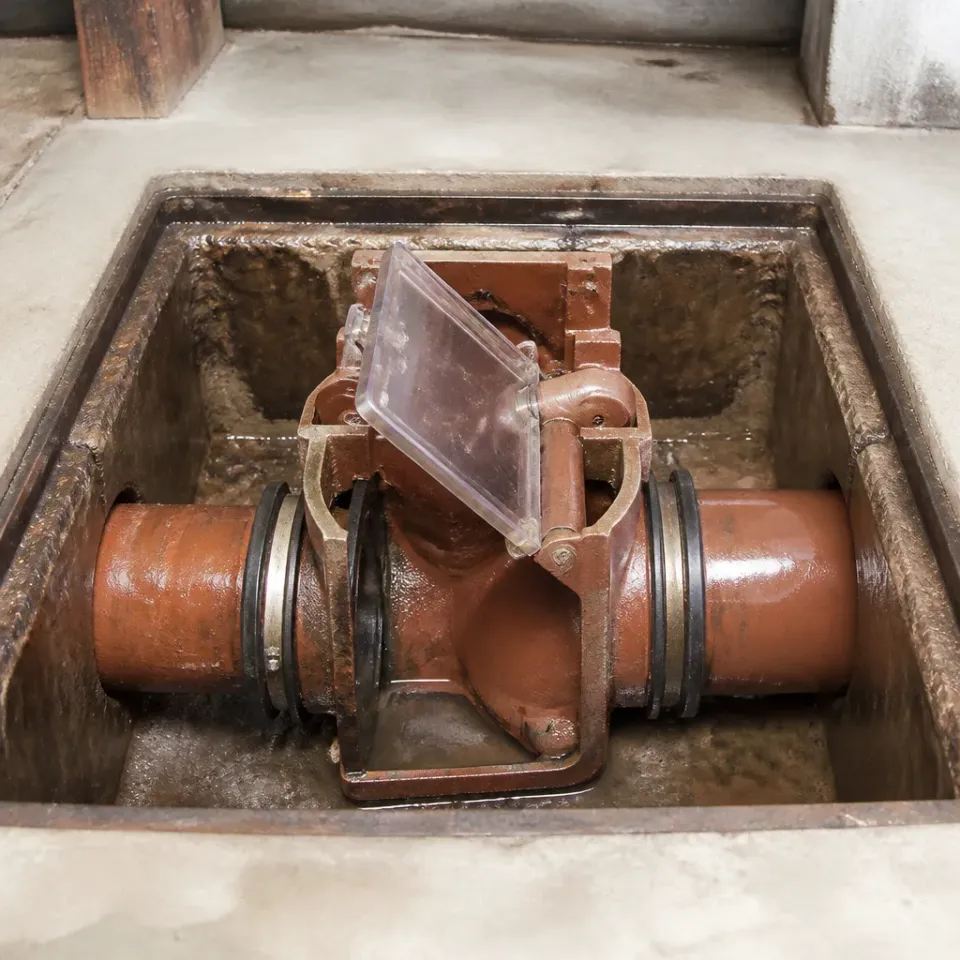
In ordinary conditions, wastewater from sinks, toilets, showers, laundry, and other connected fixtures flows outward through the building drain toward the municipal sewer. A normally open backwater valve allows that normal discharge. If water in the sewer tries to move in the opposite direction, a hinged gate or flap is designed to close and limit the reverse flow through that line. The valve is installed on a drainage pipe, not on the drinking-water supply.
A valve can become particularly relevant when heavy rainfall or rapid snowmelt puts pressure on sewer systems, or when a downstream blockage causes wastewater to seek another route. In a basement, the lowest connected fixtures—often a floor drain, shower, toilet, or laundry standpipe—may provide an entry point. A backwater valve is a protective device intended to reduce one specific pathway: reverse flow through the drainage line it serves.
The gate must move freely and close when needed. Debris, grease, wipes, or accumulated solids can interfere with operation. When the flap closes, it also prevents the home's own wastewater from flowing out through the protected line until the sewer-side condition eases. That trade-off is why an active backup is not a time to keep running water, flush toilets, or open the valve chamber. Household water use should be minimized until the blockage or surcharge clears and the valve can reopen safely.
Who should consider a backwater valve installation?
Ottawa homeowners, landlords, and property managers may want an assessment if a basement has experienced a sewer backup, contains a bathroom or laundry below grade, or has an older drainage layout whose protective devices are unknown. A history of water at a floor drain does not by itself prove the valve is missing or that a valve is the only fix. It can also indicate roots, a partially blocked lateral, a damaged sewer, or a problem in a stormwater or foundation-drainage system.
The City of Ottawa points to heavy rainfall and sewer surcharge as part of the context behind its backwater-valve requirement for new homes. Local weather can bring intense summer rainfall, winter freeze-thaw cycles, and rapid spring melt. These events can stress drainage systems, but risk varies from property to property. Age, elevation, sewer design, previous renovations, downspout connections, foundation drainage, and maintenance history all matter. No single neighbourhood label or house age can determine whether an installation is suitable.
Homeowners planning a finished-basement renovation have a useful opportunity to document the plumbing while walls and floors are already under consideration. Before covering an access point, confirm whether a valve exists, whether it can be opened for service, and whether any new basement fixtures will drain through the protected line. For a general risk review, pair this guide with our Ottawa sump-pump and basement-flooding guide and our advice on sewer-line backups and tree-root problems.
A well-scoped assessment distinguishes sewer backup from other kinds of basement water. Water coming through a foundation crack, around a window well, or from a failed sump pump follows different routes and calls for different measures. In some homes, improving grading, managing roof runoff, repairing a lateral, or servicing a sump system may be as important as—or more appropriate than—installing a backwater valve. The best recommendation is based on what has actually failed and how the property drains.
Ottawa permits, code, and inspections: verify before work
The City of Ottawa's backwater valve permit guidance says new single, semi-detached, row, and townhome dwelling units require a valve on the sanitary service lateral. It also says a building inspector must confirm a normally open valve on the sanitary building drain for each dwelling unit, in accordance with Ontario Building Code Division B section 7.4.6.4 and referenced standards. The valve must be within the dwelling and accessible for inspection and maintenance.
Those statements describe requirements for new covered dwelling construction; they should not be treated as a complete answer for every retrofit, renovation, basement suite, or existing-home repair. The permit that applies can depend on the nature and extent of the work and the property's specific circumstances. Contact Ottawa's building-permit team or consult the City's current guidance before authorizing plumbing alterations. A contractor should be able to explain who is obtaining any required permit, what drawings or documentation are needed, and how inspection will be arranged.
At the time of writing, this guide does not state a rebate amount or promise eligibility. Municipal programs and application terms can change, and eligibility may depend on location, property type, work completed, and proof submitted. Check the City's current protective plumbing information directly before counting a grant or rebate toward a project budget. Keep invoices, permit documents, inspection records, and before-and-after photos if an application requires them.
Ottawa's Sewer Connection By-law defines a backwater valve as a valve that permits flow in one direction and prevents return flow. The City's own permit page is the more direct source for current permit steps and inspection details. Ontario code and referenced standards govern compliant installation; online homeowner articles cannot substitute for project drawings, the adopted code text, or the inspector's determination.
Valve types and installation location depend on the plumbing
Backwater valves are not all interchangeable. Federal flood-prevention guidance describes normally open models, which allow routine wastewater to pass and close when backflow is detected, and normally closed models, which open to permit discharge in one direction. The valve type affects where it can be installed and how it behaves during everyday use. Ottawa specifies a normally open valve for the new-home sanitary application described on its permit page. A professional must determine what product and arrangement meet the applicable local and provincial requirements for a particular project.
Placement has to be considered against the building drain and fixture branches. A valve installed at the wrong point may leave some low-level fixtures outside its protection, interfere with drainage, or be impossible to service. The plumber should identify the route to the building sewer, the direction of normal flow, the accessible cleanouts, other connected branches, and any existing valve or check device. If the property has separate storm and sanitary systems, clarify which line is being discussed rather than assuming one device serves both.
| Planning question | Why it matters | What to ask |
|---|---|---|
| Which pipe is involved? | Sanitary wastewater, stormwater, and foundation drainage are different systems. | Can you trace and identify the line this proposed valve will protect? |
| Which fixtures are upstream? | The protected area depends on branch connections and the valve location. | Which basement fixtures will drain through this valve? |
| Can the valve be serviced? | A stuck or obstructed gate needs inspection and maintenance access. | Where will the access chamber sit after flooring is restored? |
| What approvals are needed? | Permit and inspection obligations depend on the project. | Who confirms Ottawa's requirements and arranges inspection? |
| What else could cause flooding? | A sewer valve does not stop groundwater, overland water, or sump failure. | Should we also inspect the lateral, sump, grading, or foundation drainage? |
For homeowners comparing local providers, Lister Plumbing's Ottawa backwater valve installation service page can help frame the questions to ask about site assessment, access, and permit support. Review any contractor's actual proposed scope for your house, not just a general service description.
What happens during a professional installation?
A straightforward-looking floor opening can conceal different pipe materials, offsets, old repairs, or branches that change the project. A careful plumber explains the expected stages, how the household can use water during the work, how dust and debris will be controlled, and how the open pipe will be protected. The homeowner should know what is included in restoration and what may be a separate trade or allowance.
Assess the drainage and backup history
Review the affected fixtures, prior events, cleanouts, visible piping, and any existing drawings or camera-inspection findings. Decide whether a valve is an appropriate measure.
Confirm requirements and scope
Check current Ottawa permit and inspection needs, select an appropriate compliant valve, map the intended protected area, and agree on access, restoration, and schedule.
Expose the building drain carefully
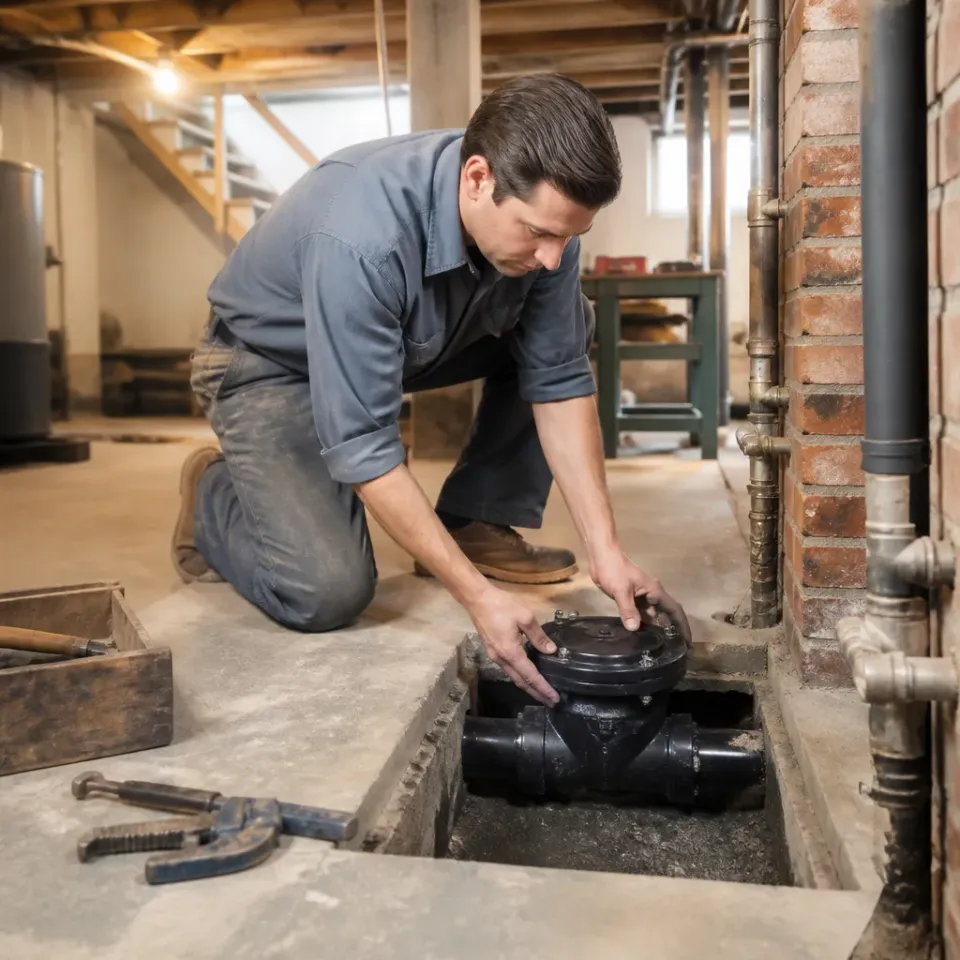
Where the design calls for an under-floor installation, the work may require a controlled concrete opening. The installer locates and exposes the target pipe while managing dust and protecting nearby services.
Install and test the assembly
The plumber makes the pipe connection, positions the valve in the correct direction, confirms that normal drainage and gate movement are satisfactory, and follows product instructions and code.
Arrange inspection and restore access
Complete any required inspection before the work is concealed. Restore the floor while retaining an identifiable, removable access cover and give the owner care instructions.
There is no reliable universal duration or flat price for every Ottawa property. A finished basement, a slab with reinforcing, difficult pipe access, a need to replace damaged sections, or inspection scheduling can change the timeline. Request a written scope that separates confirmed work from possible concealed-condition costs. Ask what happens if the pipe is cracked, badly scaled, or not where the initial estimate expected.
What a backwater valve cannot protect against
The device does not seal a foundation, prevent rainwater from flowing through a window well, or pump groundwater out of a basement. It cannot protect fixtures that are not connected to the protected section of pipe. It also does not fix a structural sewer defect or clear a blockage. A malfunctioning valve can fail to close; a closed valve can prevent the home's own drainage from discharging. Think of it as one element in a layered plan, not a guarantee that flooding is impossible.
Other practical measures may include keeping eavestroughs and downspouts in good condition, directing roof runoff away from the foundation where permitted, maintaining a working sump pump, checking its discharge and backup power, and correcting grading that sends surface water toward the house. Ottawa's recommendations and the property's own design should guide changes. Do not disconnect or reroute foundation drains, downspouts, or sewer connections without confirming the legal and technical implications.
Insurance is a separate consideration. Policies can distinguish sewer backup, sump overflow, groundwater, and overland flooding. Ask your insurer or broker which coverages apply, what limits or deductibles exist, and whether protective devices affect eligibility or documentation. An installed valve does not automatically secure coverage or a claim payment.
How to plan the project and understand the cost
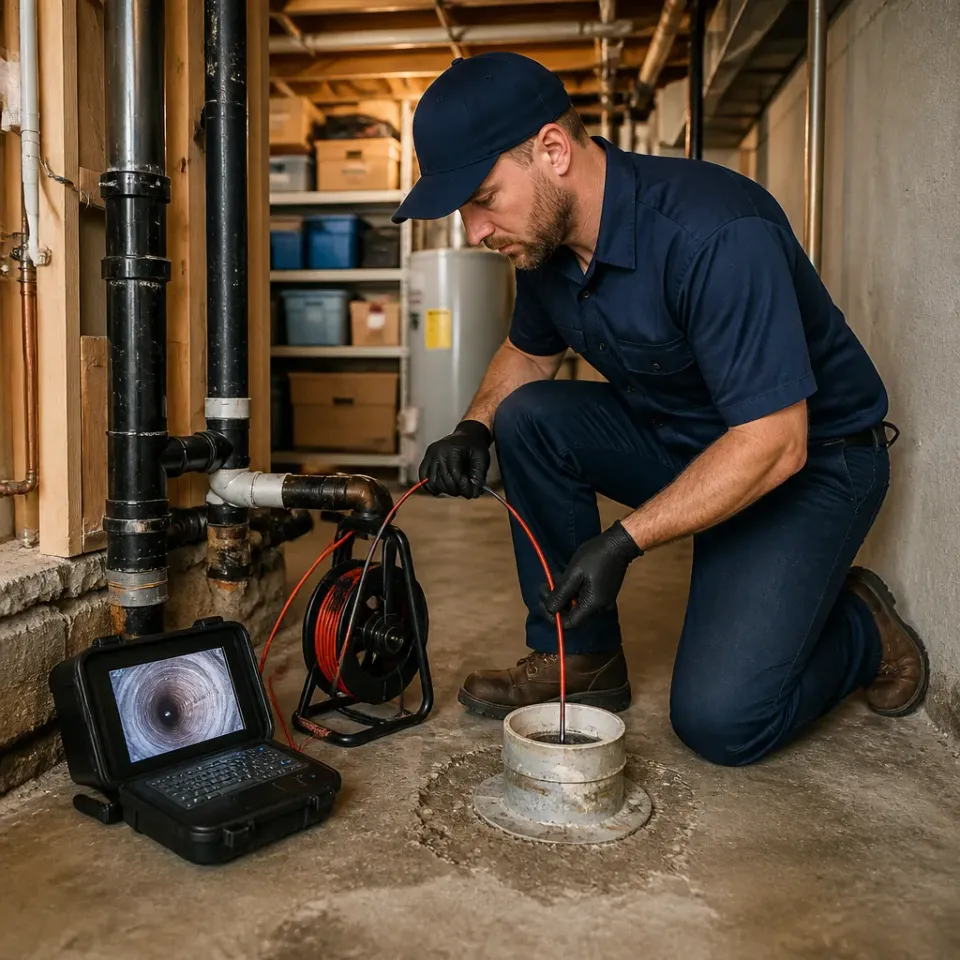
A dependable estimate should be based on what the plumber can see and verify. The price can be influenced by the route and depth of the building drain, slab thickness, floor finish, access, pipe material and condition, valve selection, permit and inspection coordination, and the amount of concrete restoration. A camera inspection may be recommended when the backup history or condition of the sewer lateral is unclear, but it is not automatically required for every installation.
Compare estimates by scope, not only by their totals. Ask whether the price includes locating and exposing the pipe, the valve and fittings, testing, disposal, permit fees if applicable, inspection coordination, concrete patching, and final cleanup. Find out how unknown conditions are priced before work begins and whether any warranty covers the valve, labour, or later drainage problems. Ask if an access cover will remain flush and reachable after flooring is reinstalled.
A lower quote may not include floor restoration or permit coordination; a higher quote may include more complete work. Request itemized exclusions so you can compare fairly. Do not rely on an online average as a quote for your particular house. For other local work-planning context, consult our Ottawa plumbing cost guide and ask the contractor to inspect the site before promising a final total.
How to choose a qualified Ottawa plumbing professional
Look for a contractor who is properly qualified for the work, insured, and willing to explain the code, permit, and inspection process. Ask who performs the plumbing, whether the person has experience with Ottawa basement installations, and how the work will be protected and tested. A responsible professional should be able to explain what the device protects and what it does not, including any fixtures or water-entry routes outside the valve's coverage.
Request a written description of the exact valve location, direction of flow, access arrangement, restoration, and any recommended follow-up. Ask how the technician will confirm that the gate moves freely and what maintenance the manufacturer calls for. If your home has repeated backups, ask whether the lateral should be inspected for roots, a belly, or damage before assuming the valve alone will resolve the underlying cause.
Be cautious of guarantees that imply a valve prevents every kind of flooding or that a particular neighbourhood automatically qualifies for a subsidy. Good advice recognizes uncertainty and checks current requirements. A local contractor's information about backflow and protective plumbing services is a starting point for questions, not a substitute for a site-specific proposal.
When the assessment identifies a repair or installation need, work with licensed Ottawa plumbers who can explain the proposed scope, access requirements, and applicable approvals before work begins.
After installation: keep access, records, and a response plan
Before the contractor leaves, ask for the product name, installation location, permit and inspection records if applicable, warranty terms, and maintenance instructions. Photograph the access cover and the surrounding floor, and note which fixtures pass through the valve. Tell household members not to tile, carpet, or store heavy items over the chamber. If basement renovations follow, show the contractor where the valve is and require that the finished design keeps it serviceable.
Establish a routine inspection schedule based on the manufacturer's instructions and a plumber's recommendation. Never open the chamber during a sewer backup, heavy rain, or suspected surcharge; wastewater can escape through the opening. If the cover is damaged, an odour develops, the flap appears stuck, or wastewater has backed up, stop using connected fixtures and get professional advice. Do not put hands into contaminated wastewater or dismantle a valve without understanding the risk.
If you are planning new lower-level fixtures, a basement conversion, or a sewer repair, have the drainage layout reviewed before construction. A sewer-line repair assessment may help investigate recurring blockage or root intrusion, while a sump-pump assessment addresses groundwater management. The right combination depends on the source of risk at the property.