Key Takeaways
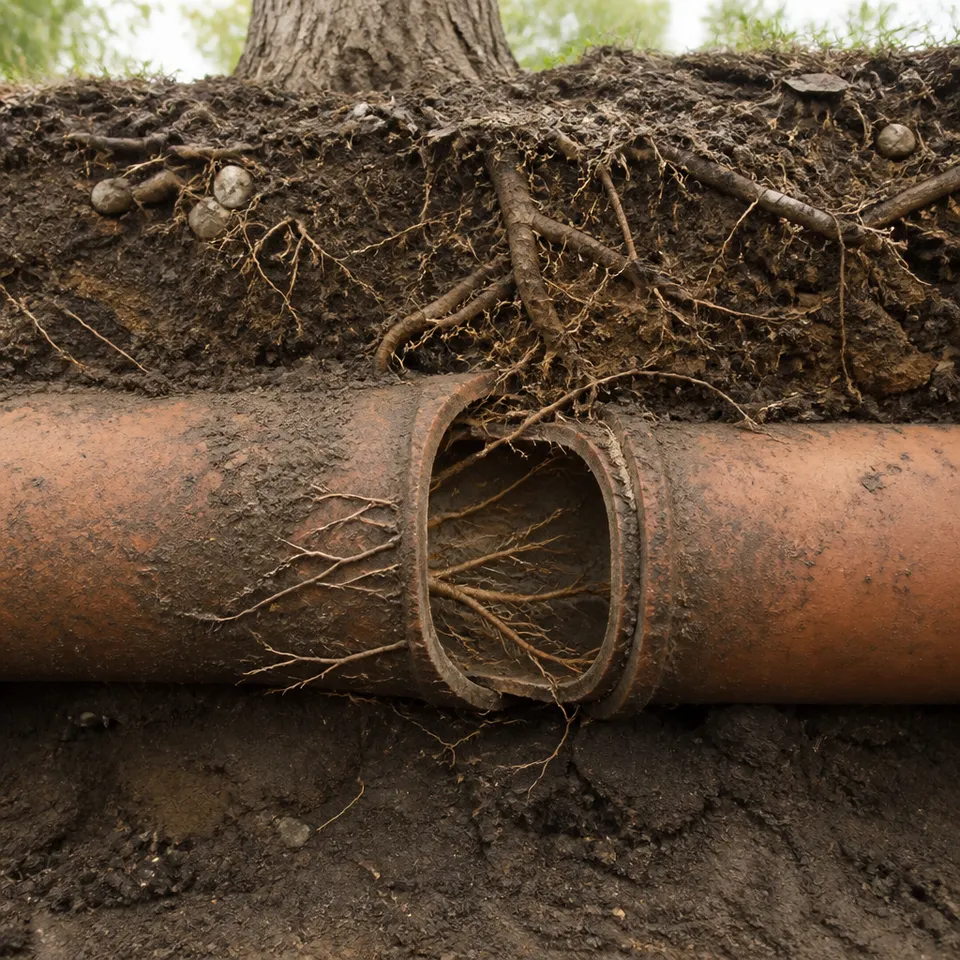
- Tree roots enter sewer laterals through tiny cracks and joints, then turn a partial obstruction into a sewer backup.
- Several slow drains, gurgling toilets and sewage in a basement floor drain point to a main-line issue rather than a single fixture clog.
- A sewer camera inspection should guide the choice between root cutting, hydro jetting, lining, spot repair and replacement.
- Ottawa's mature trees, freeze-thaw cycles and older clay or cast-iron laterals make repeat inspection worthwhile.
- Keep people away from contaminated water, stop using plumbing and call for prompt sewer line repair when wastewater rises indoors.
When Tree Roots Become a Sewer Problem
A tree beside your driveway is not automatically a threat to your plumbing. The problem starts when roots discover moisture at a weak point in a buried sewer lateral. Unlike a healthy, sealed pipe, an older joint or cracked section can release enough water vapour and moisture to attract fine feeder roots. Those roots enter the opening, branch inside the pipe and catch paper, grease and silt.
The result is often intermittent: the toilet works in the morning, the shower drains at lunch and the basement floor drain backs up after an evening of laundry. Root growth can be seasonal, but the obstruction does not disappear. Each temporary clearing leaves the opening available for more growth. That is why repeated snaking without finding the defect can become an expensive cycle rather than a repair.
For homeowners searching for sewer line repair Ottawa services, the important distinction is between restoring flow today and correcting the failed section. An experienced plumber will protect the home from an immediate sewer backup, inspect the lateral and explain options in proportion to the damage.
Signs Your Sewer Line Has Root Intrusion
A single blocked bathroom sink usually has a local cause. Root intrusion is more likely when the symptoms involve several fixtures or return after a professional clearing. Watch for these patterns:
- Multiple drains slow together: the toilet, tub and laundry standpipe share a downstream restriction.
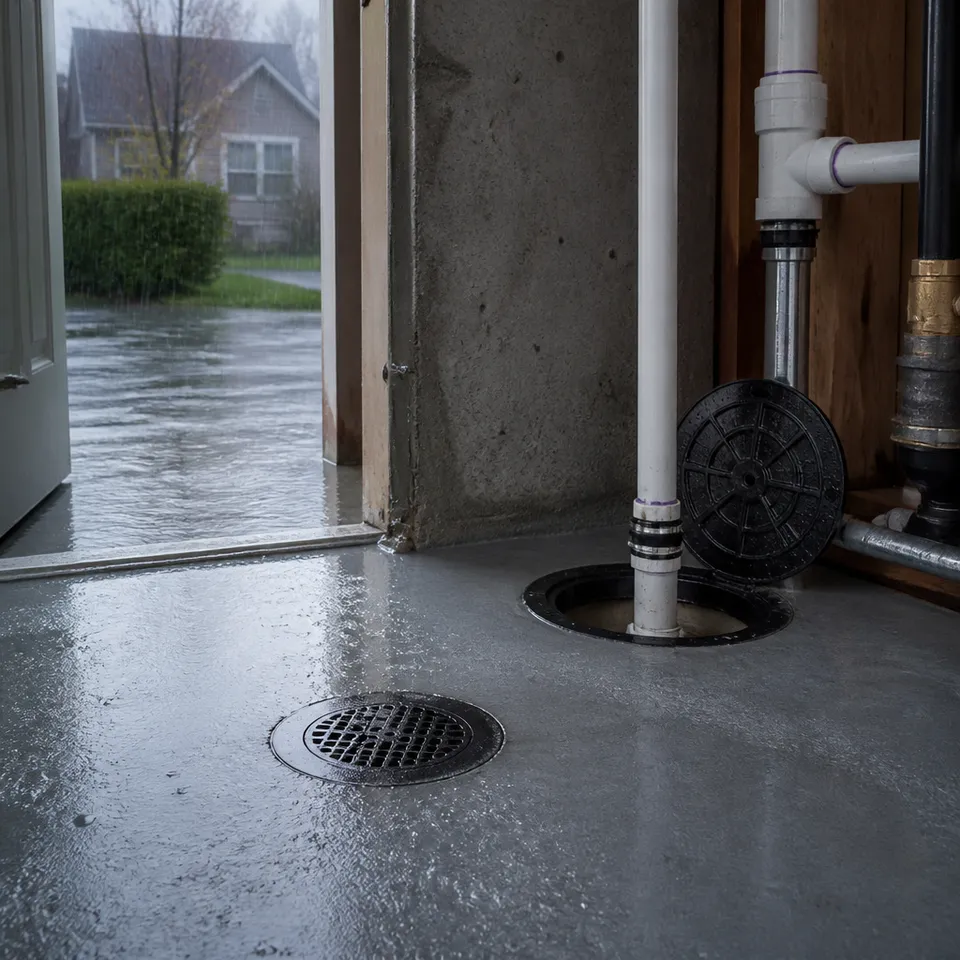
- A basement floor drain rises: the lowest opening often reveals a main sewer obstruction first.
- Toilets gurgle: trapped air is displaced as water struggles past a partial blockage.
- Backups follow heavy use or rain: a marginal line cannot handle peak discharge, and spring storms can expose a weak connection.
- The same blockage returns: recurrence after snaking is a reason to request a camera, not simply a stronger chemical.
Why Ottawa Properties Are Vulnerable
Mature trees and established streets
Older neighbourhoods such as Westboro, Alta Vista and parts of Gloucester have established lots with substantial maples, elms and other mature trees. Kanata and newer suburbs can have younger landscaping, but homes there may still inherit a long underground connection or encounter roots from a nearby street tree. The canopy above ground does not show the full root zone below it, so distance alone is not a guarantee.
Freeze-thaw movement and older materials
Ottawa's repeated freeze-thaw cycles move soil and can stress old joints. Clay tile and cast-iron laterals can be durable, yet age, joint separation, corrosion or settlement eventually create entry points. Even a newer plastic pipe can fail at a connection or be damaged by ground movement. A camera provides a much better answer than guessing from the house's construction date.
Spring storms reveal marginal capacity
During spring thaw and major rain, saturated ground and high household discharge put extra demand on a partially obstructed lateral. A line that seemed fine through winter can back up after snowmelt. If wastewater reaches a basement floor drain, stop using water immediately and treat it as a sanitation issue, not a routine slow drain.
What to Do During a Sewer Backup
Stop water use
Do not flush toilets, run taps, start laundry or use a dishwasher. Ask everyone in the home and, where relevant, an upstairs tenant to stop discharging water.
Keep people and pets away
Sewage can contain harmful contaminants. Keep children and pets out of the affected area and avoid contact with wet electrical equipment.
Protect only what is safe
Move loose belongings away from clean, dry areas if you can do so without stepping in wastewater. Do not enter a flooded electrical area; call the appropriate emergency service if there is an electrical hazard.
Call for diagnosis
Request emergency drain or sewer service and mention every affected fixture, recent rain, prior root cutting and the location of your cleanout. These details help the technician arrive prepared.
Document and disinfect professionally
Photograph damage for your insurer, preserve invoices and follow professional guidance for extraction, drying and sanitization. Do not mix household chemicals in contaminated water.
What a Sewer Camera Inspection Shows
A camera inspection Ottawa homeowners can use for a real decision sends a waterproof camera through a cleanout or another suitable access point. The technician watches the live image, records relevant findings and may use a transmitter to locate a defect from above ground. This is particularly useful before digging a driveway, finished basement or landscaped yard.
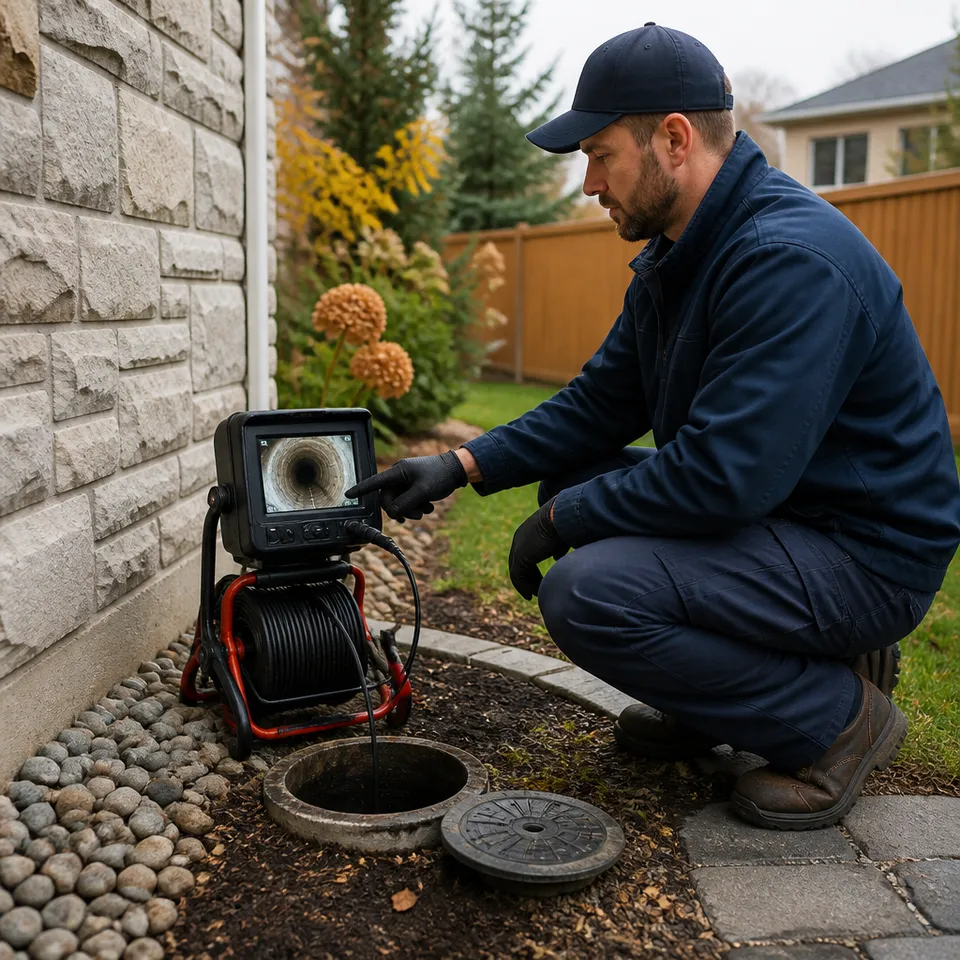
The footage can reveal roots, cracks, separated joints, standing water (a belly), grease, scale, foreign objects and a crushed or collapsed section. Ask whether the recording will be supplied, where the defect is located, what pipe material is visible and whether the technician recommends a temporary clearing or structural work. A useful report connects the finding to the proposed remedy rather than simply showing an alarming image.
Root Cutting, Snaking and Hydro Jetting
When a backup is active, the first objective is safe flow. A cable machine with a root-cutting head can open a channel through an intrusion. This is often quick and comparatively economical, but it does not seal the joint. Hydro jetting follows with a high-pressure stream that scours deposits and loose root material from the pipe walls. It can be an excellent cleaning method when the pipe is structurally capable of handling it.
The order matters. For an old clay lateral with open joints or a pipe that appears collapsed, aggressive jetting may dislodge material or worsen a defect. Inspection, access, pipe size and condition should determine equipment and pressure. Neither snaking nor jetting replaces a failed section; both are tools that can restore service while a permanent option is considered.
A useful sewer diagnosis separates three questions
Hydro Jetting vs. Snaking
| Approach | Best suited to | Important limitation |
|---|---|---|
| Root cutting / snaking | Opening a blocked line quickly; a defined root mass or urgent backup | Cuts a path but usually leaves the crack or joint where roots entered |
| Hydro jetting | Scouring scale, grease and loose debris through a structurally sound pipe | Not appropriate without considering fragile, damaged or collapsed pipe |
| Trenchless lining | Sealing many small defects while limiting excavation where access and pipe geometry permit | Requires a suitable host pipe and careful preparation; not every lateral qualifies |
| Spot repair | One local crack, displaced joint or connection with manageable access | Does not address separate defects elsewhere in the lateral |
| Full replacement | Extensive collapse, repeated failures or a lateral beyond economical repair | More excavation, restoration and coordination, though it provides a new service line |
Sewer Lateral Repair and Replacement Options
Spot repair
If one joint or short section is the source of intrusion, excavation at that location can be a sensible fix. The crew exposes the pipe, replaces the damaged section, checks grade and restores the connection. It may be preferable when the rest of the lateral is sound and the defect can be located accurately.
Trenchless lining or replacement
A cured-in-place liner creates a new pipe inside an existing host pipe, while some trenchless replacement methods pull a new pipe through the old route. These approaches can reduce disruption to driveways and mature landscaping, but they require suitable access, diameter, alignment and structural conditions. They are not a universal answer for a severely collapsed or badly offset line.
Open-cut sewer lateral replacement
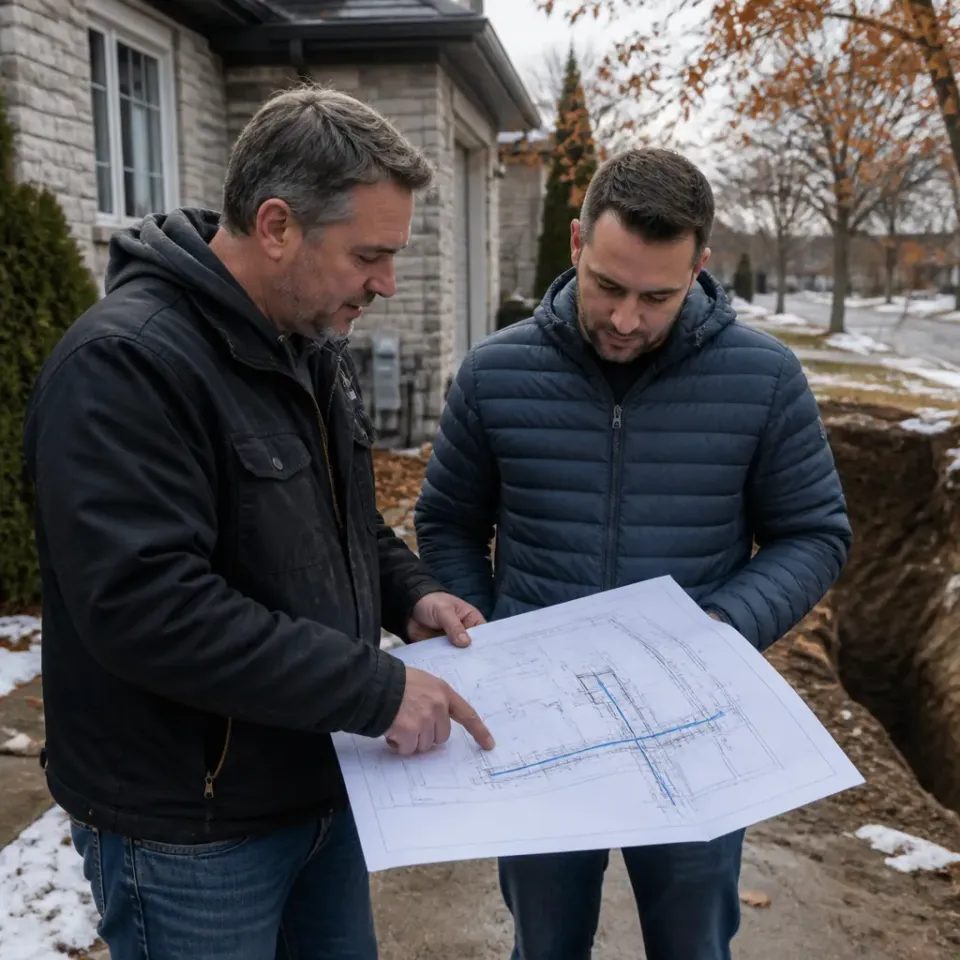
Where the pipe is collapsed, badly settled or inaccessible to lining equipment, excavation may be the most dependable solution. The quote should identify excavation depth, surface restoration, cleanout work, permits or locates and how connections will be protected. Before any digging in Ontario, confirm utility locating requirements through Ontario One Call.
A qualified Ottawa sewer line repair team can compare these options after viewing the lateral. For a home with an active backup, an emergency drain cleaning visit may be the first step, followed by structural planning.
Approximate Sewer Repair Costs in Ottawa
Pricing varies with time of day, access, depth, pipe material, restoration and the severity of the obstruction. Treat online numbers as planning ranges, not promises. A written quote should separate diagnosis, temporary clearing, permanent work and restoration.
| Work | Approximate planning range | What changes the price |
|---|---|---|
| Main-line snaking / root cutting | $250–$700 | Emergency timing, access, distance and how firmly roots are established |
| Camera inspection | $200–$500 | Cleanout access, recording, locating and the length of the lateral |
| Hydro jetting | $450–$1,000 | Pipe size, preparation, deposits and whether a return visit is required |
| Spot sewer repair | $2,000–$6,000 | Depth, surface, traffic control, connection and restoration |
| Lateral lining or replacement | $3,000–$15,000+ | Length, access, collapse, municipal coordination and landscaping or concrete |
For broader household budgeting, our Ottawa plumbing cost guide explains why labour, access and restoration can matter as much as the pipe itself. A prompt repair can also reduce the cost of cleaning and rebuilding a finished basement after a sewer backup.
Preventing Repeat Root Intrusion
You cannot safely remove a large tree simply because a pipe has roots in it, and cutting roots without considering the tree can affect its stability. Prevention starts with the lateral: repair open joints, replace failed sections and keep a cleanout accessible. Ask the plumber whether a lining or another method can seal the route without disturbing established landscaping.
- Have recurring backups documented on camera rather than scheduling indefinite emergency snaking.
- Do not flush wipes, paper towels, grease or hygiene products; they give roots something to trap.
- Keep basement floor-drain traps filled with water and ask about a suitable backwater valve where appropriate.
- During spring storms, postpone unnecessary high-volume water use if the lateral has known restrictions.
- Maintain eavestroughs and grading so surface water is not directed toward a vulnerable cleanout or foundation.
For related warning signs elsewhere in the house, our guide to hidden leaks in Ottawa homes can help distinguish a supply leak from a drainage problem. If wastewater is actively entering, use the emergency plumbing service rather than waiting for regular maintenance.
Choosing a Sewer Line Contractor
Ask who will perform the camera inspection, whether you receive the recording, how the defect will be located and whether the recommendation is based on the actual pipe condition. A reputable contractor explains the difference between a flow-restoring service and structural repair, gives an itemized quote and identifies exclusions such as concrete, asphalt or landscaping restoration.
Check that the company carries appropriate insurance, follows safe excavation and locating procedures, and understands Ottawa properties from older Westboro homes to newer Kanata builds. For homeowners who want a single point of contact, Ottawa sewer and drain professionals can help coordinate diagnosis and repair.